

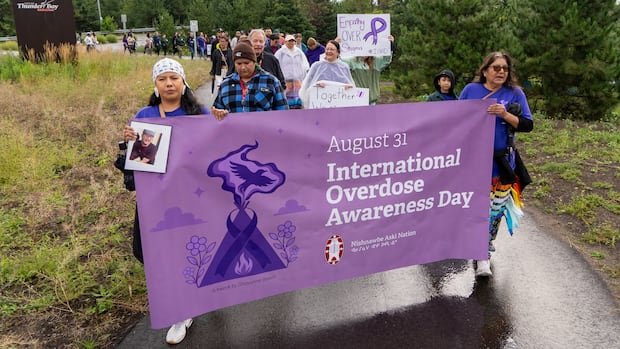

Krista Vescio has been on a journey of recovery from drug addiction for almost 16 years, with the tragic loss of her sister in 2007 serving as a pivotal moment that led her to seek help. Vescio shared that her sister’s passing, though devastating, ultimately became a turning point that motivated her to break free from addiction. Reflecting on her progress, Vescio expressed gratitude for her sobriety, stating, “Here we are, 16 years in September, and going strong.”
Taking part in an awareness-raising walk organized by Nishnawbe Aski Nation (NAN), Vescio joined numerous individuals advocating for action on the drug crisis. The Thunder Bay district has witnessed a concerning surge in opioid-related deaths, surpassing the provincial average by over five times in 2025, as reported by the Office of the Chief Coroner.
During the walk from Marina Park to the Intercity Shopping Centre, covering a roughly five-kilometre distance, participants converged at an overdose awareness event hosted by the City of Thunder Bay Drug Strategy and Thunder Bay District Health Unit (TBDHU). Vescio emphasized the necessity for more accessible resources to aid individuals seeking help, underscoring the importance of initiating support at the right moment.
Anna Betty Achneepineskum, a deputy grand chief with NAN and a member of Marten Falls First Nation, has long been an advocate for enhanced support services in the city, including secure and sustainable funding for frontline agencies assisting those impacted by addiction. Addressing the current inadequacies in detox centers and the crucial need for post-recovery support and housing, Achneepineskum stressed the urgency of comprehensive solutions and urged the incoming city council to prioritize these critical issues.
With the alarming statistic of 61 confirmed opioid-related deaths in the Thunder Bay district last year, Kandace Belanger, manager of street outreach, harm reduction, and sexual health at TBDHU, highlighted the human toll behind these numbers. Belanger emphasized the significance of recognizing the individuals behind the statistics, emphasizing that each loss represents a loved one within the community.
Events like International Overdose Awareness Day on August 31 serve as platforms to facilitate open dialogues about addiction and available services, Belanger noted. Encouraging the utilization of naloxone kits, which can reverse the effects of an opioid overdose, she highlighted their free availability at pharmacies and through the health unit. These initiatives aim to provide support and a sense of community for individuals affected by addiction and loss.
Elaine Keesick and Marilyn Keno, both members of North Spirit Lake First Nation, participated in the walk to honor their loved ones lost to addiction and to stand in solidarity with those currently battling substance abuse. Offering words of encouragement and support to individuals struggling with addiction, Keesick and Keno emphasized the importance of unity and mutual assistance within the community. Vescio echoed their sentiments, urging individuals to persevere, emphasizing that hope and support are always within reach for those seeking recovery.