

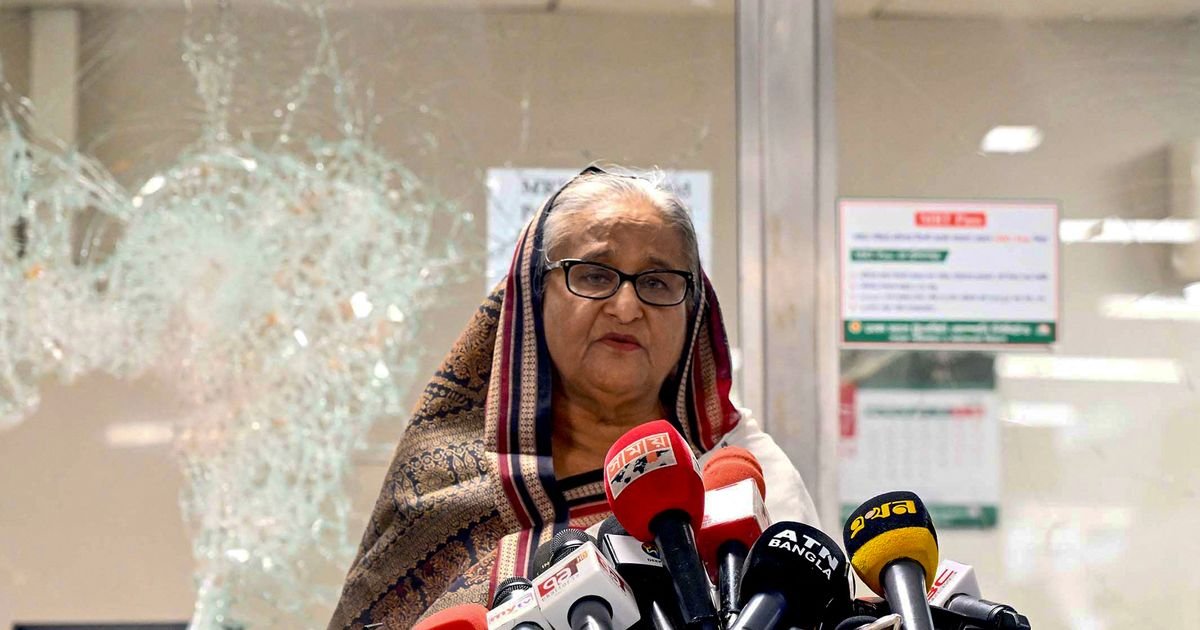

Former Bangladesh Prime Minister Sheikh Hasina has been sentenced to death for her involvement in violent protests that led to the deaths of numerous individuals. Hasina was convicted of crimes against humanity in her absence and currently resides in exile in India. The charges against her included incitement, giving orders to kill, and failing to prevent atrocities.
Additionally, former inspector general of police Chowdhury Abdullah Al-Mamun and ex-interior minister Asaduzzaman Khan Kamal were found guilty of allowing the use of deadly force against protesters and not taking action to prevent violence against them.
Hasina stepped down from her position and fled to India in August of the previous year following widespread demonstrations and clashes between protestors and law enforcement. The significant loss of life sparked calls for accountability from the government and demands for Hasina to resign after her long tenure as the country’s leader.
The United Nations reported that as many as 1,400 individuals may have lost their lives during the unrest. The verdict was delivered at the International Crimes Tribunal, Bangladesh’s domestic court for war crimes, located in the capital city of Dhaka. Concerns have been raised that the ruling could lead to further unrest ahead of upcoming parliamentary elections.
Security measures were heightened by the interim government in anticipation of the verdict, with increased presence of military personnel, paramilitary forces, and police in Dhaka and other regions of the country. Hasina’s political party, the Awami League, called for a nationwide strike in response to the sentencing.
During the court proceedings, Justice Golam Mortuza Mozumder stated that Hasina had committed crimes against humanity by authorizing the use of drones, helicopters, and lethal weapons. Relatives of the deceased protesters reacted emotionally in the courtroom upon hearing the verdict, while some individuals expressed support as the judgment was announced.
Prior to receiving the death penalty, an audio message from Hasina was played in court where she expressed her acceptance of the outcome, emphasizing her commitment to serving her people. The turmoil that erupted in July of the previous year initially began as a student-led protest but quickly evolved into a widespread uprising. Hasina responded by directing a government crackdown and permitting the use of live ammunition against civilians by security forces.
In a statement issued from India following the sentencing, Hasina denounced the verdicts as politically motivated. She criticized the tribunal as biased and asserted her willingness to confront her accusers in a fair and impartial legal setting for a thorough examination of the evidence.