

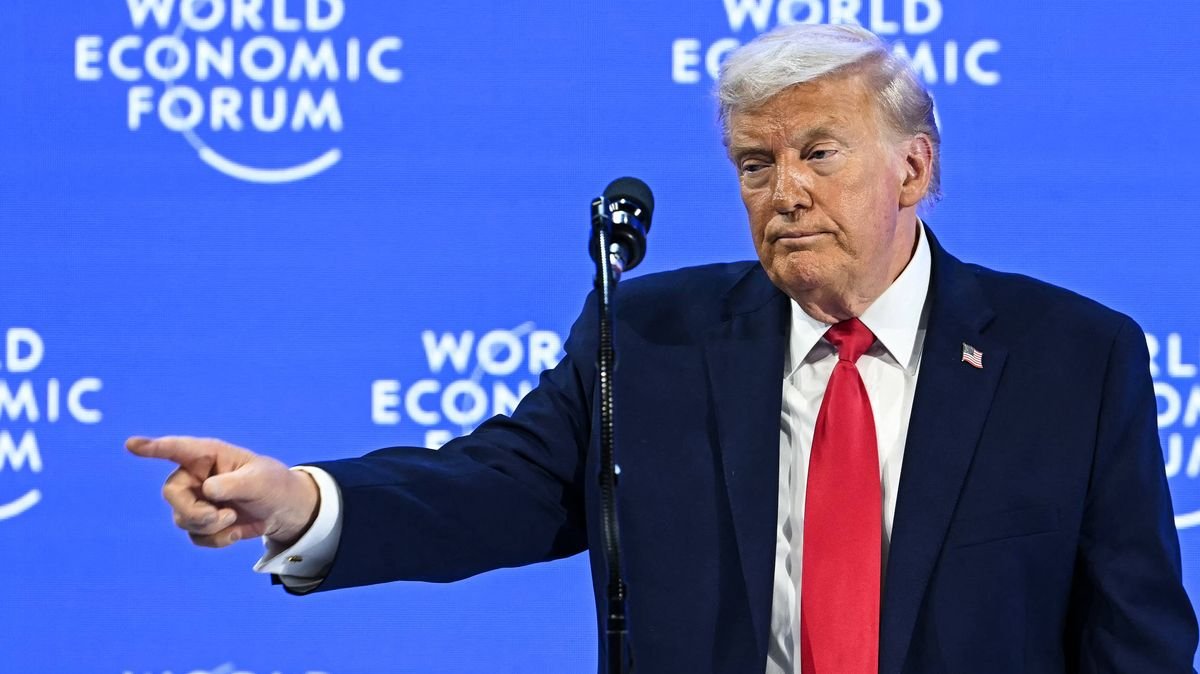

Donald Trump’s presence at Davos was anticipated to be a moment of reassurance for the global community. However, it turned into a display of self-importance and geopolitical ignorance, highlighting the dangers of his perspective. Addressing global leaders at the World Economic Forum, Trump focused more on appealing to his base and a fictional audience that idolizes him unquestionably.
The actual content of his speech was overshadowed by the negative impact it had. It showcased a leader mistaking bluster for effective leadership, confidence for strategy, and inconsistency for strength. His fixation on Greenland, portraying it as a potential acquisition akin to a real estate deal, was particularly notable.
Trump’s insistence on asserting U.S. sovereignty over Greenland due to its strategic significance raised concerns. The region holds importance due to its location between North America and Europe, the opening of Arctic shipping routes, and its valuable rare-earth minerals. However, Trump’s approach of equating influence with ownership and disregarding cooperation in favor of control reflects a shortsighted perspective.
European leaders, particularly Denmark, a NATO ally overseeing Greenland, expressed alarm at Trump’s rhetoric about acquiring the territory. Such disregard for established norms of sovereignty and international cooperation can destabilize the global order. Trump’s behavior at Davos not only failed to impress but also deepened existing concerns about his leadership style.
While Trump initially projected a strong stance on Greenland, subsequent developments revealed a shift in his approach. Despite claiming progress in negotiations, there was no concrete agreement on U.S. ownership or sovereignty transfer. The episode highlighted the inconsistency and unpredictability of Trump’s diplomatic maneuvers.
Mark Carney’s remarks at Davos emphasized the fractured state of the U.S.-led global order under Trump’s leadership. The erosion of trust in American reliability and predictability poses challenges for allies and necessitates a shift towards multilateralism. The implications of Trump’s Greenland saga extend beyond the region, impacting international alliances and diplomatic norms.
In conclusion, Trump’s handling of the Greenland issue underscores a troubling disregard for established norms of international relations. By prioritizing ego over cooperation and entitlement over collaboration, he risks undermining stability and trust among allies. The global reaction to his approach signals a broader concern about the erosion of diplomatic norms and the future of international relations.