

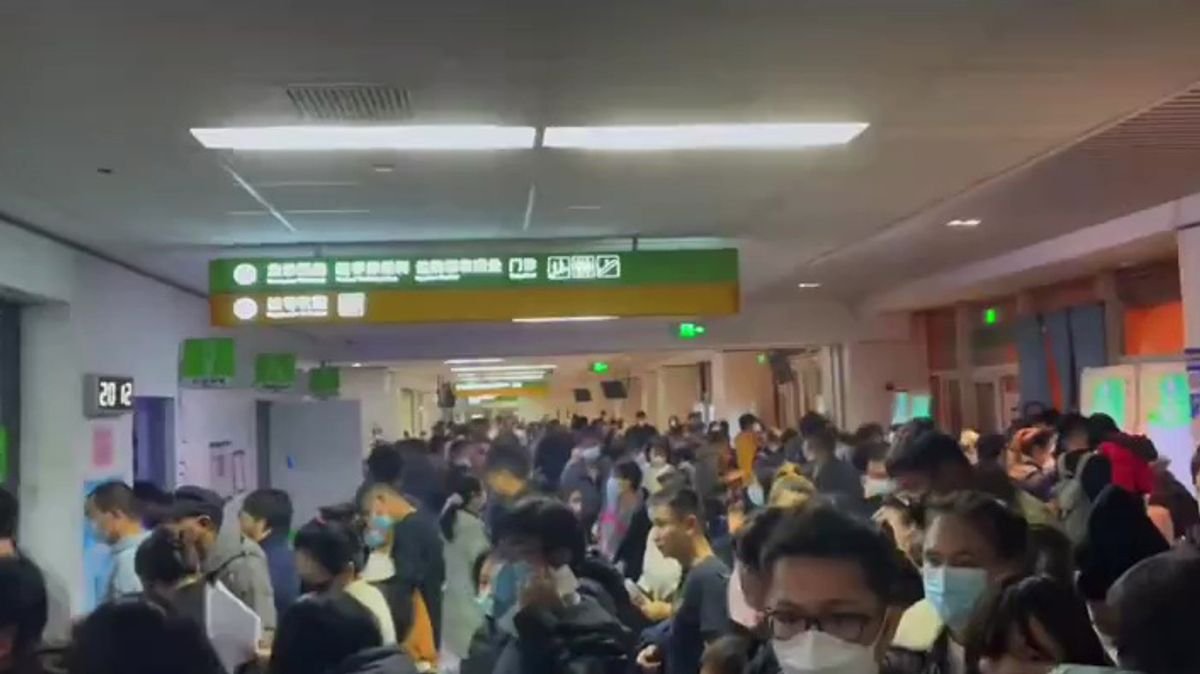

Hospitals in China are grappling with a surge in cases of the influenza virus that has been spreading rapidly throughout the country in recent weeks.
Recent reports from various regions across China have highlighted a growing number of cases of the H3N2 influenza virus, affecting multiple healthcare facilities from urban centers like Beijing and Tianjin to provinces such as Hebei, Henan, Guangdong, Fujian, Shandong, Shanxi, and others.
Concerns of a potential outbreak have heightened following an announcement by Peng Zhibin, a researcher at the Center for Disease Control and Prevention of the Communist Party of China, stating that the country’s influenza infection rate had sharply increased towards the end of November.
Images circulating on Chinese social media platforms depict crowded hospital scenes, with children waiting for medical attention in overflowing corridors and waiting rooms.
Alarming data from the Alibaba Health platform indicates a 500% surge in purchases of influenza antiviral drugs between November 10 and 21, raising apprehensions of an imminent larger outbreak.
The overwhelming situation in Chinese hospitals has been compounded by reports from the China Central Television (CCTV) and the Chinese Centre for Disease Control (China CDC) revealing high influenza rates in 17 provinces.
While the Beijing CDC acknowledged a peak period of influenza activity in the city, they reported a slowdown in the upward trend. Dr. Zhang Datao, director of the institute for infectious and endemic disease control at the Beijing CDC, confirmed that the primary virus responsible for the spike in infections in Beijing is the Influenza A virus, specifically H3N2. The health expert noted that no other respiratory infectious diseases have been identified alongside Influenza A as the predominant cause of the seasonal outbreak.
Reports indicate that the virus outbreak has predominantly affected children aged 5-14, with most outbreaks occurring in educational and childcare settings. Tragically, one child in China has reportedly succumbed to influenza A.
Influenza A, an airborne flu-like virus, manifests with symptoms such as high temperatures, coughing, loss of appetite, and general body aches and pains. In severe cases, it can lead to pneumonia and be fatal, especially for individuals in high-risk categories or with compromised immune systems. Dr. Zhang highlighted the virus’s tendency to mutate, triggering annual influenza outbreaks.
Despite the escalating infection rates, the Chinese Center for Disease Control and the Communist Party of China have stated that no significant mutations have been detected in the H3N2 influenza virus at present.
To address the growing influenza outbreak, the National Health Commission of China has directed local authorities to enhance medical service provision by expanding outpatient appointment availability and extending service hours. Additional measures include the establishment of extended hours clinics, as well as evening and weekend clinics to meet the healthcare demands of the public.