

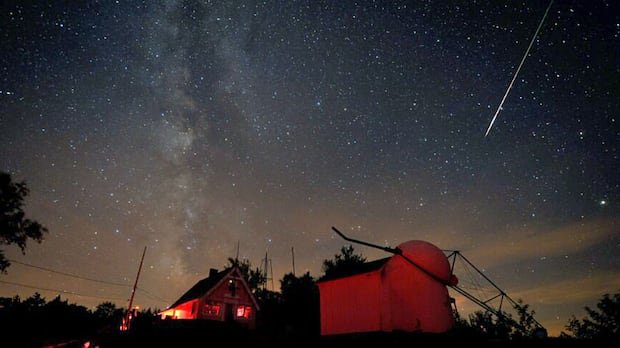

August brings one of the most anticipated meteor showers of the year – the Perseids. This year, coinciding with the peak of the shower, sky gazers will have the opportunity to witness a partial solar eclipse.
The Perseids shower is renowned for its abundance of bright meteors and favorable viewing conditions, making it a favorite among stargazers. The peak viewing period falls on the night of August 12-13, aligning with a new moon phase, ensuring optimal visibility without moonlight interference.
Peter Brown, a renowned expert in Meteor Astronomy at Western University, anticipates a spectacular display of Earth-grazing meteors during this year’s Perseid shower. These fast and luminous meteors enter the Earth’s atmosphere and shoot back into space, creating a breathtaking sight.
The meteor shower is expected to reach its peak around midnight Eastern Daylight Time, potentially offering a glimpse of up to 120 meteors per hour under ideal dark-sky conditions. While such high numbers may not be visible to all viewers, the increased meteor rate enhances the chances of witnessing several bright meteors.
Enthusiasts need not wait until the peak night to observe the Perseids as the shower commenced on July 17, with meteor sightings progressively escalating as the peak approaches. Monitoring the weather forecast is crucial, and if clouds are expected on the peak night, early observation on preceding days is recommended.
For the best viewing experience, find a dark location, refrain from using bright devices like phones that hinder night vision, and allow your eyes to adjust to the darkness for optimal meteor spotting. The radiant point of the Perseids lies in the Perseus constellation, although meteors can streak across the entire sky, providing a captivating celestial show.
In addition to the Perseids, other active meteor showers include the southern delta Aquariids, alpha Capricornids, and kappa Cygnids, each offering varying meteor rates. Alongside these showers, sporadic meteors add to the spectacle of what Peter Brown aptly describes as “meteor Christmas.”
As the night sky dazzles with meteors, a partial solar eclipse is set to occur on August 12. Although not visible from Canada, regions like Greenland, Iceland, Spain, and parts of Portugal will witness a partial eclipse where the moon will appear to take a small bite out of the sun. Viewers in eastern locations will observe a more significant eclipse compared to western regions like B.C. and Alberta.
To safely view the partial solar eclipse, ensure the use of approved solar eclipse glasses to protect your eyes. The eclipse presents a unique opportunity to witness the cosmic dance of the Earth, moon, and sun in motion, offering a humbling experience of celestial phenomena.