

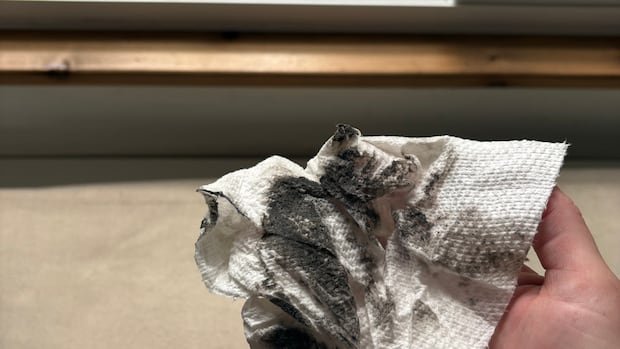

A group of researchers based in Hamilton has uncovered insights into the issue of soot accumulation in neighborhoods near the city’s industrial zone. Residents have long voiced concerns about a dark, dirty substance covering their properties, with a recent surge reported in early July. Sarah Styler, an associate professor focusing on environmental chemistry at McMaster University, along with Grace Yao, a PhD candidate under Styler’s supervision, are part of a project titled “What’s the Grime?” aimed at addressing this problem.
The researchers collaborated with volunteers to gather samples across Hamilton in 2024 and 2025, revealing that the soot contains harmful chemicals consistent with coal burning. Additionally, elevated levels of dust and polycyclic aromatic hydrocarbons (PAHs) were detected near the industrial area in northeast Hamilton. According to Styler, the closer to the industrial sector, the greater the amount of falling dust and toxic compounds present.
The study, supported by a $15,000 grant from the university in 2024 and conducted in partnership with Environment Hamilton, involved sampling soot at the residences of 50 volunteers throughout the city. Styler highlighted that while the team examined 13 types of PAHs, other hazardous substances could also be present in the grime. Despite limitations in resources preventing a comprehensive analysis, the researchers emphasized the significant role of coal combustion in generating the identified PAHs.
Styler emphasized that the findings may not be surprising to residents directly impacted by the soot fallout, attributing the issue to industrial emissions near coke plants. However, there has been a perceived lack of information dissemination from official channels, leading to frustration among locals. The Ministry of the Environment, Conservation and Parks has been conducting tests to determine the source of the soot, with results expected to be shared publicly.
The research team plans to present their findings at a community meeting on August 20 and is expanding their study to include 200 volunteers to explore additional compounds in the grime. They are also investigating effective cleaning methods for the affected areas.