

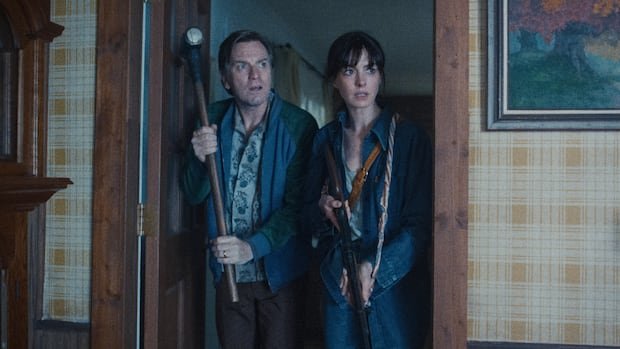

In 1982, the concerns of a homemaker may revolve around her teenage children, her husband’s work commitments, or even strange occurrences in her neighborhood. Enter Oak Street, where a family finds themselves transported back to the late Jurassic era, facing both external threats and internal struggles.
The family, led by father Greg, mother Denise, and their children Audrey and Brian, embodies a typical American household. As the story unfolds, it channels a Spielbergian vibe with a touch of Stephen King’s essence, offering a nostalgic 80s adventure for audiences seeking a break from serious cinema.
While “The End of Oak Street” promises a time-traveling dinosaur spectacle, it falls short of delivering a truly captivating narrative. Despite drawing inspiration from classic Spielberg films, the movie lacks the depth and purpose that made those works iconic.
As the family grapples with personal secrets and survival in the face of prehistoric dangers, the film struggles to weave a coherent storyline. The abrupt shifts in character focus and repetitive action sequences diminish the impact of the dinosaur attacks, leaving viewers questioning the film’s direction.
While the movie provides some entertainment value with its visual spectacle, it fails to offer a compelling reason for audiences to invest in the characters’ journey. The nostalgic homage to Spielberg’s style may resonate with some viewers, but the lack of substantive storytelling leaves a void in an otherwise promising concept.
Despite its shortcomings, “The End of Oak Street” serves as a reminder of the need for meaningful storytelling in the realm of blockbuster entertainment. As audiences seek engaging narratives, the film’s reliance on spectacle over substance raises questions about the future of cinema and the role of artificial intelligence in creative endeavors.