

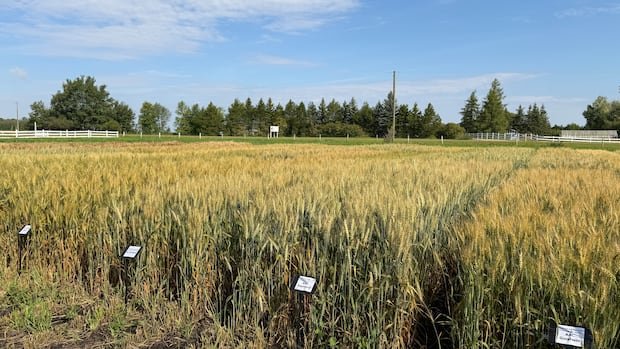

In northeastern Alberta, researchers are addressing copper deficiencies in cattle by applying the mineral to wheat crops. This deficiency can impact the fertility and overall health of the animals. Concurrently, different cover crops are being tested in another part of the field to determine their effectiveness in weed suppression, potentially reducing the need for herbicides.
Jay Cory, a farmer and chair of the Lakeland Agricultural Research Association (LARA), emphasized how research sparks new ideas and insights for farmers. LARA, a non-profit organization serving northeastern Alberta, conducts various studies at its Fort Kent research field, situated around 250 kilometers northeast of Edmonton between Bonnyville and Cold Lake.
Recently, local producers were welcomed to tour the facility and explore the ongoing trials, including investigations into crop varieties and practices aimed at enhancing productivity and sustainability. Maria Angelica Ouellette, a research scientist with LARA, highlighted the organization’s approach of testing ideas under realistic conditions, considering factors like changing weather patterns.
The research conducted by LARA is influenced by inquiries from farmers in the region, aiming to help them achieve more sustainable and productive crops. This year, the research faces the challenge of excessively wet weather, impacting crop performance. The program is driven by producers, ensuring that research aligns with their needs and experiences on the land.
Alyssa Krawchuk, LARA’s executive director, stressed the importance of local research due to the varying growing conditions across different regions of the province. The organization’s goal is to minimize risks for farmers by conducting unbiased local research and sharing results through events like field tours.
Jay Cory emphasized the significance of evaluating the cost-effectiveness of potential solutions, underscoring the importance of balancing costs against potential yield increases. Neil, Jay’s father and a seasoned farmer, highlighted the personal value of having a dedicated research facility in the region, reducing the risk associated with adopting new products or techniques.
This hands-on approach to research not only benefits the local farming community by providing valuable insights but also serves as a platform for testing and validating new agricultural practices and technologies.