

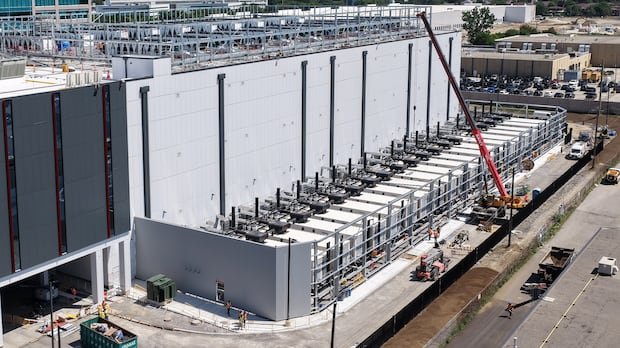

Ontario Premier Doug Ford unveiled the province’s fresh data center framework on Thursday, emphasizing its commitment to keeping Canadians’ data within the country’s borders. The framework is centered on three key pillars: promoting economic development, ensuring data protection and sovereignty, and encouraging community investment and fostering public confidence.
During the announcement in Guelph, Ford highlighted the significance of the new data center playbook in driving future economic growth, creating employment opportunities, and boosting tax revenues. The framework mandates that data centers cover the entirety of their electricity consumption costs, incentivizing projects to develop their power generation capabilities. Moreover, it establishes a distinct rate category for large new data centers, ensuring that no additional costs are passed on to Ontario residents.
In a bid to support the province’s artificial intelligence (AI) strategy, which aims to generate significant economic growth and create thousands of new jobs annually, Ontario emphasized that it will not provide financial incentives to attract investments. This move aligns with the province’s vision of fostering sustainable growth and innovation within the data center industry.
As municipalities across Ontario deliberate on data center developments, with Oakville recently voting to implement a one-year moratorium and Mississauga set to vote on a similar measure in September, the province’s data center framework serves as a critical enabler of its AI strategy. The framework is expected to drive economic growth and job creation, positioning Ontario as a hub for technological innovation and development.
Green Party of Ontario leader Mike Schreiner recently called for a pause on data center approvals, expressing concerns about the environmental impact and community benefits of these projects. Schreiner and other advocates emphasize the need for stringent regulations to ensure responsible data center development, including the use of closed-loop water systems to minimize water consumption.
In response to these concerns, Ontario’s Minister of Economic Development, Vic Fedeli, affirmed the province’s commitment to prioritizing data centers that employ closed-loop systems, highlighting the importance of sustainable practices in the industry. Premier Ford echoed this sentiment, emphasizing the necessity of educating the public about the critical role data centers play in supporting various sectors while maintaining environmental sustainability.
Despite the province’s efforts, some critics, including Schreiner, believe that the current playbook lacks specific regulations and protections to address environmental and community concerns adequately. The Ontario Greens advocate for a moratorium on new data centers until robust regulations are in place to safeguard communities and the environment.
Looking ahead, Waterloo region is examining the local impacts of data center developments, with officials seeking to understand the economic and environmental implications of these projects. Coun. Colleen James tabled a motion to prepare an information report for the Region of Waterloo council, aiming to provide insights into data center development and its broader impacts. The report, expected to be completed early next year, will play a crucial role in informing local decision-making and ensuring sustainable growth within the region’s data center industry.