

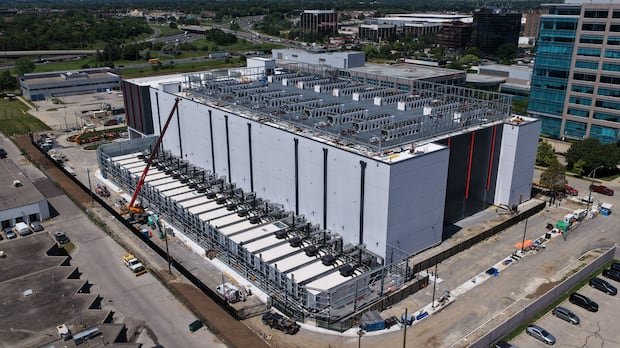

Ontario’s newly introduced data centre framework, as announced by Premier Doug Ford in Guelph, is expected to assist municipalities in managing the presence of large-scale data centres in their communities. The framework, centered on economic development, data protection, community investment, and public confidence, aims to provide consistency among communities in determining their approach to data centre projects.
Technology analyst Carmi Levy highlighted the significance of the guidelines in establishing a unified approach across different municipalities. Previously, the absence of a standardized framework had led to a varied landscape where some communities welcomed data centres while others did not. The provincial government’s proactive step in setting out clear criteria was commended by Levy, who emphasized the need for such initiative.
Under the framework, data centres seeking approval are required to contribute both financially and non-financially to host communities through avenues such as job creation, training initiatives, and infrastructure enhancements. Furthermore, data centres must cover the full cost of their electricity consumption and any necessary upgrades without passing on additional expenses to residents.
Premier Ford emphasized the importance of ensuring data centres bear the full cost of their energy consumption to incentivize self-sufficient power generation. This approach aims to safeguard Ontario families from any undue financial burdens. Additionally, the framework highlights the province’s intention to leverage its strategic advantages, like a favorable climate and skilled workforce, to attract data centres based on non-monetary incentives.
The framework also underscores the adoption of environmentally friendly practices by new data centres, including noise reduction technologies and closed-loop cooling systems to minimize ecological and community impact. These measures align with the growing emphasis on sustainable operations within the industry.
Municipalities across Ontario are actively engaging with the data centre issue, with some, like Oakville and Mississauga, considering moratoriums on data centre developments. Essex County and other regions are also reviewing their land policies to prepare for potential data centre proposals. In Strathroy-Caradoc, Mayor Colin Grantham has been vocal about his reservations regarding large-scale data centres in urban areas, reflecting broader community concerns.
While acknowledging the necessity of data centres in the digital age, Mayor Grantham emphasized the importance of ensuring safeguards against adverse impacts on communities. He welcomed the provincial framework as a step towards addressing residents’ apprehensions but maintained his opposition to data centre projects in urban settings.
Looking ahead, there are calls for further legislation at both provincial and federal levels to establish comprehensive regulations governing large-scale data centres. Stakeholders anticipate forthcoming AI-centric legislation to address specific rules and standards for data centre operations. The evolving landscape underscores the imperative for Canada to adopt a balanced approach that supports digital economy growth while addressing environmental and societal considerations.