

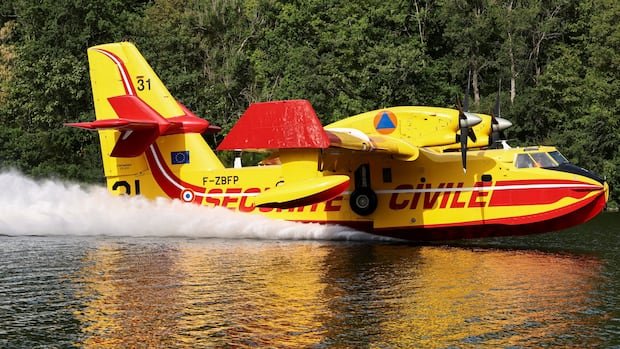

Pressure is mounting on De Havilland, the manufacturer of Canadair “Super Scooper” water bombers, to ramp up production as Canada, the United States, and Europe face a challenging wildfire season. The Calgary-based company is resurrecting the production of Canadair after acquiring the program from Bombardier in 2015.
The iconic Canadair firefighting planes are meticulously crafted by hand in Calgary, utilizing a supply chain across Canada. The announcement of the revived production line in 2022 is yielding results, with the first two aircraft expected to be finished and delivered by early 2028.
Amid current shortages and aging fleets, Canadian premiers and European leaders are eager to secure these aircraft. First introduced in the 1960s, the Canadair amphibious planes were specifically designed for battling extensive wildfires in Canada’s remote regions, boasting the capability to swiftly scoop up water from lakes, rivers, and oceans.
The political sphere has been abuzz with criticism in France and Spain over the insufficient operational Canadairs, highlighting a lack of preparedness to combat wildfires and extreme weather conditions. Provincial leaders, like Manitoba’s Wab Kinew, have also expressed concerns over the scarcity of new water bombers, emphasizing the urgent need for additional resources.
De Havilland is feeling the heat as demand surges for its Canadair aircraft. The company is contemplating the construction of a second production line to meet the overwhelming requests. Alberta Premier Danielle Smith is advocating for a firm order from Ottawa, which would provide the necessary certainty for De Havilland to expand its production capacity.
Currently, De Havilland has orders for 38 water bombers, with delivery timelines stretching between 2032 and 2033. The intricate manufacturing process involves tens of thousands of parts, with approximately 80% sourced domestically. As demand escalates globally due to climate change, the necessity for more firefighting aircraft is becoming increasingly evident.
Experts warn of potential competition if De Havilland fails to meet the rising demand, which could result in foreign companies developing rival firefighting aircraft. The Canadian government’s focus on bolstering domestic manufacturing underscores the importance of maintaining Canada’s leading position in producing firefighting aircraft.
A Senate report released in June recommends establishing a national fleet of modern firefighting aircraft to address the escalating wildfire challenges in Canada. While aircraft play a crucial role in wildfire management, they are just one component of a comprehensive strategy that includes prevention and mitigation efforts.
The federal government is committed to enhancing the national capacity to respond to intensifying wildfire seasons, working closely with provincial and territorial counterparts to coordinate effective wildfire response strategies.