

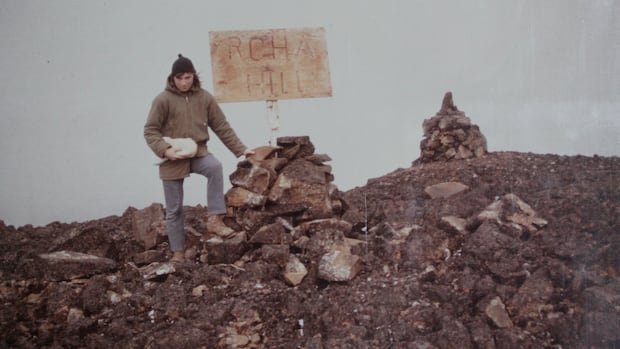

In 1974, 19-year-old Doug Munson embarked on a journey to the Isachsen High Arctic weather station after securing a job interview with the federal government. Initially unaware of the station’s location, Munson embraced the opportunity and ventured from southern Ontario to the remote site, situated only 1,300 kilometers from the North Pole.
Decades later, the Isachsen station stands abandoned and designated as a contaminated area, prompting the federal government to plan for its remediation starting next summer. The site poses environmental hazards due to the presence of toxic substances like asbestos, lead, mercury, and mold, as outlined in documents submitted by the Department of Environment and Climate Change Canada to the Nunavut Impact Review Board (NIRB).
Reflecting on his time at the station in the 1970s, Munson vividly recalls the profound impact it had on his personal and family life. Established post-World War II as part of a joint Canada-U.S. weather monitoring initiative, the orange-painted station facilitated weather observations with Munson and his team of meteorologists tracking various climatic parameters such as temperature, humidity, and winds for long hours each week.
Amidst their duties, the team found solace in recreational activities like hiking, listening to hockey games on CBC Radio, and playing hockey using makeshift equipment. Munson’s son, aAron Munson, later stumbled upon his father’s diary entry from the challenging winter months, spurring him to visit the station in 2016. Capturing the remnants of the once-bustling site through photography, aAron described the experience as eerie, evoking a sense of a “ghost station” preserving the memories of past inhabitants.
Despite the station’s closure in 1978, Munson expressed a sense of melancholy knowing that the site would soon disappear. He acknowledged the value of preserving memories through photographs and cherished recollections, recognizing them as precious remnants of a bygone era.