

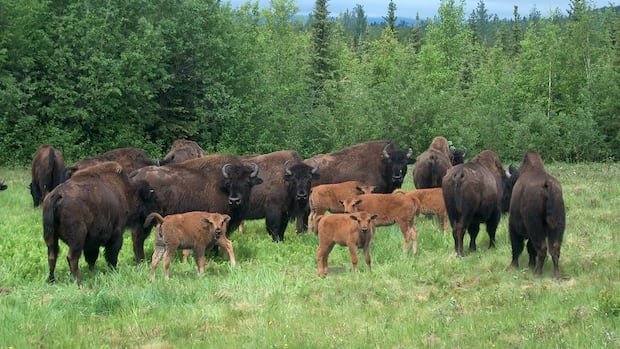

The N.W.T. Department of Environment and Climate Change (ECC) has observed a decrease in the number of bison collisions on roads in the Northwest Territories. While there were 60 collisions recorded from 2021 to 2025, only one collision has occurred in 2026 so far. Bison Ecologist Terry Armstrong attributes this decline to the impact of wildfires on bison behavior.
According to Armstrong, wildfires prompt bison to alter their movement patterns, leading them to seek out recently burned areas for new vegetation growth. This behavior shift has potentially redirected bison away from roadsides with appealing vegetation, resulting in fewer collisions.
Wood bison, classified as a threatened species at both territorial and national levels, have a population estimated to be several thousand, with ECC suggesting a count of just over 2,500 individuals. Collisions between 2021 and 2025 led to the deaths of at least 76 bison, with a significant number of incidents occurring along Highway 3.
As the rutting season approaches from August to September, Armstrong warns of potential encounters with aggressive bison on the road due to mating and dominance battles among males. He emphasizes the importance of cautious driving during this period, especially during low-light conditions at dawn and dusk, to reduce collision risks.
Armstrong advises drivers to drive slowly, maintain distance from bison, and avoid actions that may startle them, like honking. It is crucial to remember that bison are formidable animals and should never be approached or provoked.