

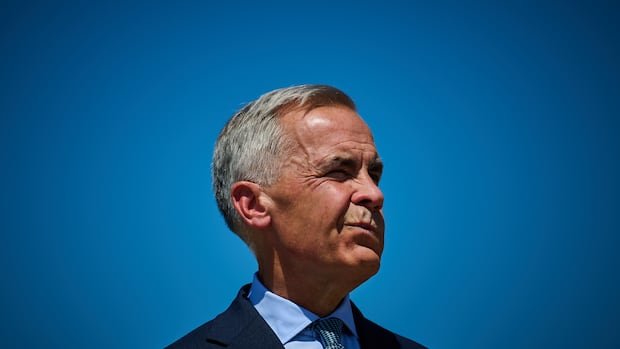

Prime Minister Mark Carney expressed that ongoing negotiations with the United States to prevent additional tariffs set to be enforced this week are challenging and focused. Carney intends to engage in discussions with his American counterpart within the next 48 hours to secure a mutually beneficial agreement.
During a press briefing in St. John’s on Monday, where he unveiled a significant hydroelectric agreement between Quebec and Newfoundland and Labrador, Carney refrained from divulging details about the progress of the talks to avoid President Donald Trump’s threatened Section 338 tariffs on Canadian goods worth billions of dollars.
“We are currently engaged in sensitive and intensive negotiations, and this is not the appropriate forum for public discussions,” Carney mentioned in French, emphasizing Canada’s position of strength in the negotiations.
When asked about potential retaliation if an agreement is not reached, Carney affirmed his readiness for all possible scenarios. Canada’s Trade Minister Dominic LeBlanc and Chief Trade Negotiator Janice Charette have been in talks with U.S. Trade Representative Jamieson Greer to not only avert the proposed Section 338 tariffs but also reduce existing Section 232 tariffs on industrial products like steel, aluminum, autos, and lumber in exchange for certain Canadian concessions.
Following these discussions, Carney is anticipated to engage in talks with Trump to outline the next steps. The negotiations aim to determine the extent of benefits Canada can gain from the U.S. in exchange for its concessions. The U.S. seeks the reinstatement of American liquor in Canadian stores and the elimination of Canada’s retaliatory tariffs on U.S. autos, along with changes to the dairy sector’s quota allocation system.
In return, Canada is pressing for the abandonment of the impending Section 338 tariffs, which could impose a 50% duty on numerous new products starting August 19. Additionally, Carney’s team is advocating for significant tariff reductions in sectors heavily impacted by Trump’s levies over the past year.
Despite signals from Greer that the U.S. is unwilling to completely remove its tariff structure, negotiations continue. Erin O’Toole, a member of the prime minister’s Canada-U.S. advisory committee, acknowledged some progress in talks with the U.S., emphasizing the necessity of fair deals for Canadian workers and the economy.
O’Toole highlighted the importance of reaching agreements that benefit both countries to avoid detrimental tariff wars that harm economies and workers. He stressed that Canada is preparing to respond in kind if Trump’s proposed tariffs are implemented, emphasizing the need to prevent such actions that could disrupt economic stability.