

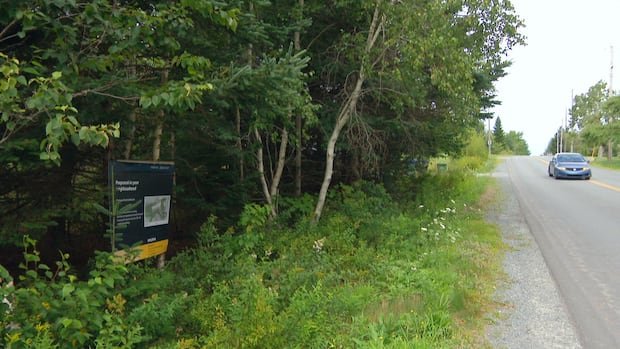

Halifax city council rejected a proposed housing development in a historic Black community following concerns raised by residents regarding the scale of the project and the presence of nearby unmarked graves. The developer, responsible for the Links at Montague golf course, sought permission to construct a six-storey shared housing facility with special care services for seniors on Montague Road in Lake Loon.
The proposed building would have accommodated 125 housing units adjacent to the existing driving range, with the developer undertaking to fund a new sidewalk linking the development to the nearest transit stop. During a public hearing on the project before the Harbour East-Marine Drive community council, residents expressed apprehensions about the project’s size being incompatible with the low-density neighborhood, potential traffic congestion on the already busy road, concerns about the impact of any blasting on nearby wells, and the belief that unmarked graves extended onto the development site.
Crystal Mulder, a resident living near the site, highlighted the lack of respect for ancestral remains in the development process, emphasizing the importance of conducting a thorough archaeological study. While a city staff report indicated no evidence of graves within the development area, Mulder insisted on the necessity of a comprehensive archaeological assessment. The province recommended an archaeological monitor during construction to halt work if any human remains were discovered.
Despite city staff affirming that the proposal adhered to planning regulations and endorsing its progression through a development agreement, the majority of the community council voted against the project. Concerns were raised about traffic impacts, the project’s scale, and the significance of the archaeological findings. Residents also emphasized the need for more robust community engagement by the developer.
Coun. Becky Kent underscored the criticality of addressing unmarked graves seriously, while Coun. Sam Austin stressed the importance of considering the community’s interests and history of marginalization in planning decisions. The Lake Loon and Cherry Brook communities are initiating collaboration with the African Nova Scotia Community Action Planning team to formulate a community action plan and potential new planning strategy.
Anthony Riley, president of the Lake Loon-Cherry Brook Community Development Association, highlighted the community’s commitment to safeguarding its heritage for future generations. The developer retains the option to appeal the council’s decision to the Nova Scotia Regulatory and Appeals Board.
While the developer’s consultant did not respond to CBC’s inquiries, Riley acknowledged the ongoing battle and anticipated a potential appeal. The rejection of the project underscores the community’s efforts to preserve its historic identity and address concerns regarding development within the area.