

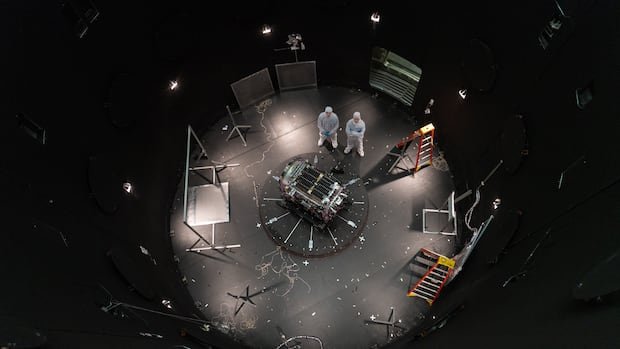

NASA’s efforts to save the failing Swift Observatory have been abandoned, leading to the telescope’s inevitable re-entry into the atmosphere later this year. The decision to halt the mission was jointly announced by NASA and Katalyst Space Technologies, following complications with the Link spacecraft’s control system.
Katalyst confirmed that the Link spacecraft would not be able to retrieve Swift and raise it to a higher orbit due to operational issues. Consequently, the telescope, which has been instrumental in observing significant cosmic events for over two decades, will descend into the atmosphere, with the expected event not occurring before October.
In an attempt to rescue Swift, NASA had allocated $30 million to Katalyst, aiming to elevate the telescope to a more sustainable orbit. Unexpected solar activity led to a rapid decline in Swift’s altitude. The rescue spacecraft encountered difficulties shortly after its launch in July, entering an uncontrollable spin. Despite efforts to stabilize its trajectory, ongoing problems with navigation persisted.
While expressing disappointment over the outcome, NASA Administrator Jared Isaacman emphasized the significance of the rescue mission. As a silver lining, Katalyst plans to maintain proximity with the telescope using Link to showcase potential capabilities for future rescue endeavors.
Katalyst CEO Ghonhee Lee described the mission as ambitious and fast-tracked, completed within a year. The company highlighted the valuable lessons learned throughout the endeavor.
Swift Observatory, operational since 2004, had its scientific instruments deactivated earlier this year to mitigate its descent. The telescope was positioned at an altitude of 345 kilometers as of the latest update. Initially intended to restore Swift to its original 600-kilometer orbit for extended cosmic observations, the mission faced insurmountable challenges.
Furthermore, the potential rescue of NASA’s Hubble Space Telescope, also experiencing orbital decay due to solar activity, may be jeopardized following the Swift mission failure. The 36-year-old Hubble was slated for a rescue attempt if the Swift mission succeeded, raising uncertainties about its future orbital stability.