

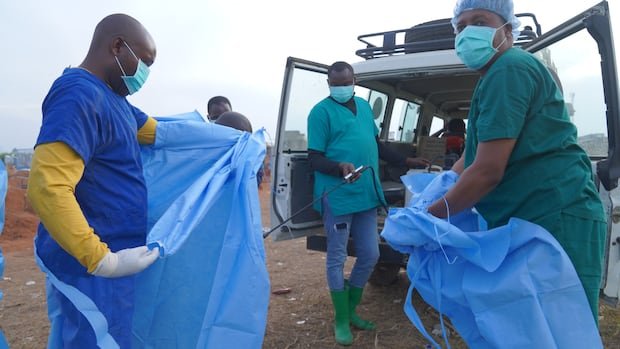

More than 2,500 individuals have lost their lives in the Ebola crisis in the Democratic Republic of Congo, which is rapidly spreading in a region larger than France, stated Julien Harneis, a senior United Nations coordinator for Ebola. Harneis, speaking from Bunia, a city in northeastern Congo, emphasized the urgent need for additional assistance as the current funding is expected to be depleted soon.
Healthcare workers in the area are facing hostility from local residents who are fearful and upset about the outbreak. Tragically, some of these workers have contracted the disease and succumbed to it. Meanwhile, a batch of vaccines for a different strain of Ebola has been dispatched for advanced testing in the D.R.C. The country sought these vaccines from the global Ebola vaccine stockpile last week.
The vaccine, known as Ervebo, is designed to protect against the Zaire Ebola virus strain, but now 20,000 doses out of the 70,000 allocated will be utilized in a trial to assess its effectiveness against the current Bundibugyo virus strain. The World Health Organization has highlighted the necessity of conducting clinical trials to ascertain whether Ervebo can offer protection against the Bundibugyo virus.
In late July, the Congo’s 17th Ebola outbreak became the most severe in the nation’s history in terms of the number of cases, surpassing the previous outbreak from 2018 to 2020. This current epidemic is caused by the Bundibugyo species of Ebola, for which there are no approved vaccines or treatments.
Harneis expressed deep concern about the exponential growth of the Ebola outbreak, stating that it is spreading rapidly in an area larger than France. The situation is escalating faster than the response efforts, exacerbating the humanitarian crisis in a region plagued by three decades of conflict.
As the crisis unfolds, healthcare workers are increasingly at risk, with about 160 of them contracting Ebola and 43 losing their lives. Harneis highlighted the challenges faced by healthcare responders, including attacks on personnel, ambulances being vandalized, and healthcare facilities being targeted by angry individuals.
Moreover, the spread of misinformation and conspiracy theories has fueled anger among locals, leading to violent reactions when health measures prevent traditional burial practices. Harneis also pointed out the impact of aid cuts on humanitarian efforts and the logistical difficulties in paying and supporting the large workforce dedicated to combating the outbreak.
The situation remains dire in the Congo, with over 260 attacks on healthcare workers in the past six months and eight fatalities among them. The critical need for sustained aid, support, and effective response strategies is paramount in addressing the escalating Ebola crisis in the region.