

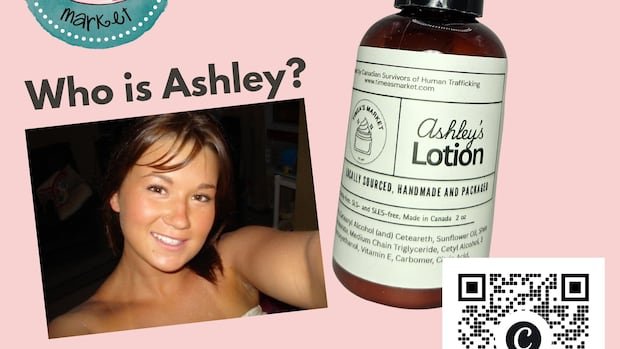

A fresh initiative at ONroute service stops along Ontario highways is utilizing personal care items and QR codes to raise awareness about human trafficking and assist potential victims in recognizing risky situations.
Dubbed Timea’s Market, the campaign was spearheaded by Timea Nagy, a survivor of human trafficking who now advocates for victims. Nagy shared her experience, recalling how she was trafficked without even realizing it at the time.
At designated ONroute locations along highways 400 and 401, visitors can find hygiene products like shampoo, body wash, and soap bearing names of survivors such as Michelle’s Deodorant and Ashley’s Lotion. Adjacent to these items is a QR code that, when scanned, provides access to survivor narratives and information on warning signs.
The campaign also features a website offering a self-assessment comprising five questions to help individuals evaluate if they might be in a trafficking scenario. Nagy emphasized that many victims are unaware of their situation due to misconceptions perpetuated by media portrayals.
Nagy, who was trafficked for three months upon arriving in Canada from Hungary, shared her harrowing experience of being coerced into working in strip clubs to repay a fabricated debt. Despite the ordeal, Nagy eventually rebuilt her life over a span of 25 years.
Contrary to popular belief associating human trafficking with major cities like Toronto, data from Statistics Canada revealed that Guelph reported the highest rate of police-notified trafficking cases in Ontario in 2025. Guelph Police Chief Gordon Cobey attributed this increase to enhanced awareness and law enforcement efforts in detecting and addressing trafficking incidents.
Cobey underscored the importance of initiatives like Timea’s Market in raising awareness and fostering discussions about human trafficking to aid in identifying and assisting more victims. He highlighted various indicators of trafficking, urging vigilance towards signs like sudden appearance changes, missing identification, persistent fear, physical abuse signs, or impaired decision-making abilities.
Nagy expressed hope that the campaign and its assessment tool would help victims recognize their plight sooner, potentially sparing them from enduring years of hardship in rebuilding their lives.