

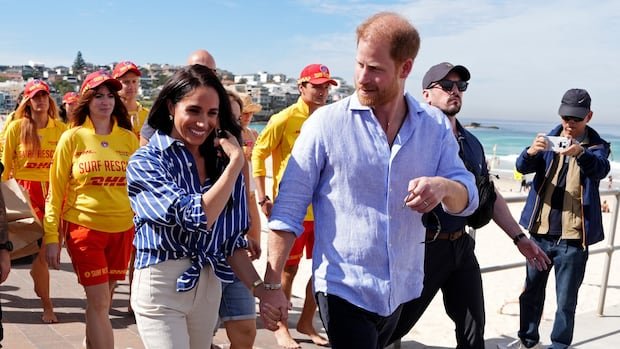

When Prince Harry and Meghan Markle come back to the UK this month, they will re-enter a nation that has been discussing them from a distance for six years. Their children, Prince Archie and Princess Lilibet, are set to start school in the UK in September, and reports suggest that the couple will reside privately outside London for an extended period while maintaining their non-working royal status.
There is anticipation surrounding the couple’s return, with questions arising about whether the tabloids’ interest in them will diminish this time after their previous strained relationship with the British press led them to move to California. Steven Barnett, a communications professor at the University of Westminster, highlighted the polarized portrayal of Harry and Meghan in the British media, often depicted as “the villains” due to personal attacks and sensationalized stories.
The media scrutiny on the couple intensified with headlines like the Daily Mail’s reference to Meghan’s mother and The Sun’s controversial coverage of Markle’s past work. A study by The Guardian revealed a significant disparity in negative coverage between Meghan and Kate Middleton in UK newspapers.
Royal commentator Afua Hagan noted that interest in the couple’s return will escalate in Britain. She expressed that while Harry and Meghan are reentering a challenging environment, they are better equipped to handle it this time.
Barnett pointed out that the British public might be engrossed in other ongoing narratives, diverting attention from Harry and Meghan’s return. The recent legal setback faced by Prince Harry and others in privacy lawsuits against the Daily Mail could potentially lead to further negative press coverage.
The couple’s return coincides with a critical juncture for the British media following the tragic death of Jason Arday, a Cambridge professor. There has been a debate on media ethics and scrutiny, drawing parallels between the treatment of Arday and the negative coverage faced by Meghan.
The discussion around Arday’s death has sparked conversations about race, diversity, and representation in elite British institutions. Marcus Ryder highlighted the lack of diversity in British media and its impact on the portrayal and opportunities for Black individuals.
Ryder emphasized how narratives around individuals like Arday and Meghan reflect broader societal issues concerning race and privilege. The couple’s transition to non-working royal status after residing in California for six years has already been extensively covered, leaving little new to add to the ongoing narrative.
Going forward, Ryder hopes that media representations of Harry and Meghan reflect the positive sentiments that many, especially Black women, hold towards Meghan Markle.