

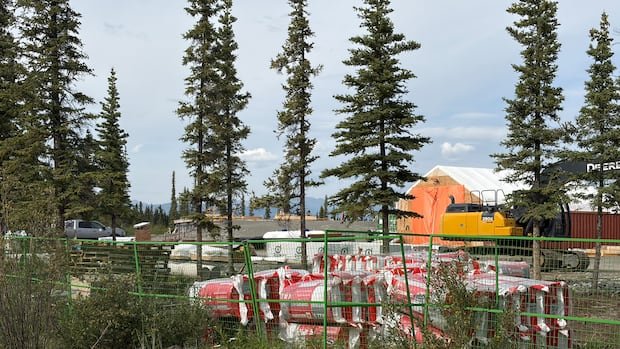

The opening of a highly anticipated new school in Burwash Landing, Yukon, has been postponed until 2028. This delay was necessary because the original school design did not meet the seismic building requirements for the area, prompting a redesign.
Fred Jay, the acting deputy assistant minister of the territory’s capital infrastructure delivery office, explained that a discrepancy in the building code version used was identified during a routine design review. The exact financial impact of the delay and additional work is still unknown, but Jay anticipates having cost estimates within the next month.
The new school, Kêts’ádań Kų, was planned to replace the Kluane Lake School in Destruction Bay, located approximately 15 kilometers away. The Kluane First Nation has long advocated for a school in Burwash Landing and in 2020, reached an agreement with the Yukon government to collaborate on the planning and construction.
In 2022, both federal and territorial governments allocated $22.5 million in preliminary joint funding for the project. The following year, land was cleared for the school, with construction originally scheduled to commence in 2024.
Chief Bob Dickson of the Kluane First Nation highlighted that the initial school designs lacked essential safety measures required for a seismically active area like Burwash Landing. Consequently, significant redesign work was necessary, including the foundation, windows, and classroom spaces.
The delay will impact students like Samara, whose graduation milestone at the new school will now be deferred. The current Kluane Lake School, although equipped with dedicated staff, lacks space and amenities like a gym that the new school will offer. The hope is that the new school’s presence in Burwash Landing will enhance educational opportunities, retain families in the community, attract newcomers, and foster greater community involvement.
Construction is currently underway, with expectations to enclose the building this year, allowing interior work to progress through the upcoming winter. Chief Dickson remains optimistic about the project’s advancement and looks forward to potential positive developments in 2028.