

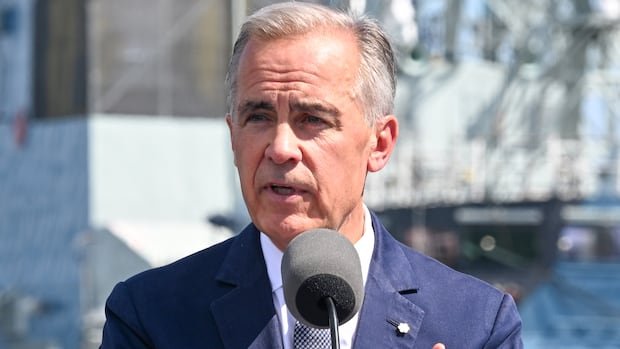

Prime Minister Mark Carney is open to resuming negotiations with the Trump administration once the U.S. shows genuine interest in forming a strong economic partnership and stops treating Canada as inferior. Carney emphasized the importance of the U.S. approaching the negotiating table with a cooperative attitude towards Canadian industries. While acknowledging the existing trade agreement between Canada and the U.S. (CUSMA), Carney expressed the belief that improvements could benefit all parties involved. However, he stressed that Canada cannot accept a stance that disadvantages its industries compared to American counterparts.
Carney recently announced Canada’s withdrawal from negotiations due to what the government deemed as unfair and economically unsound last-minute demands introduced by the U.S. team. These demands would have limited Canada’s ability to engage in trade agreements with other countries and posed a threat to the French language through potential constraints on subsidies to French-language media and bilingual product labeling requirements. The escalation resulted in $28 billion worth of Canadian exports to the U.S. facing a 50% tariff increase over the weekend.
Regarding the U.S.’s intentions, Carney expressed concerns over the proposed auto deal, which he believed would have negatively impacted the industry over time. President Donald Trump’s announcement of a 50% tariff increase on Canadian automobiles, car parts, and steel by January 1 was met with criticism from Carney, who viewed it as a significant move that would alter Canada’s trading status with the U.S.
Ontario Premier Doug Ford suggested imposing a surcharge on electricity in response to Trump’s tariff escalation, highlighting the need for collective action among provinces exporting energy to the U.S. Carney supported the idea, emphasizing Canada’s importance as a supplier of energy, critical minerals, and auto parts to the U.S. despite conflicting claims from the Trump administration.
In a separate initiative, Carney unveiled an $11.3 billion investment in Quebec’s shipbuilding industry to construct six new icebreakers for the Canadian Coast Guard using domestically sourced steel. Quebec Premier Christine Fréchette emphasized the province’s commitment to strengthening the economy but refrained from immediate action regarding energy surcharges bound for the U.S.
While Carney outlined conditions for Canada’s return to the negotiation table, U.S. Vice-President JD Vance indicated ongoing discussions and expressed respect for the negotiation process. Criticizing Canada’s trade policies, Vance labeled Canada and China as problematic trade partners and accused Canada of undervaluing its military and imposing unfair tariffs on U.S. products.