

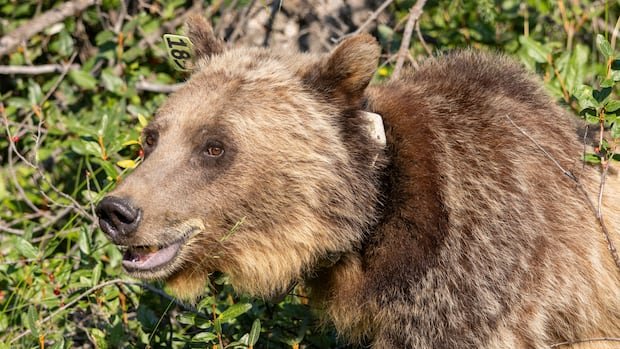

The province of Alberta is supporting a grizzly bear monitoring research project, although advocates are seeking a more detailed population count. According to Environment Minister Grant Hunter’s office, the government is dedicated to aiding the sustainable recovery of grizzly bears through science-based methods. The project, led by fRI Research, aims to provide crucial scientific data on grizzly bear populations, habitat usage, and ecology to inform future management decisions.
Since 2010, grizzly bears have been classified as a threatened species in Alberta. The initiative, spearheaded by Darío Fernández-Bellon and his team at fRI Research, focuses on exploring innovative approaches for monitoring grizzly bear populations. The project, launched in 2023, involves the collection and analysis of grizzly bear hair samples from specific sub-populations in west-central Alberta to assess population trends, survival rates, and potential range expansion.
Both fRI Research and the Alberta government are not conducting a comprehensive count of the grizzly bear population in the province due to the high costs and resource-intensive nature of such studies. The last provincial population study dates back to 2018, and estimates beyond that year rely primarily on anecdotal information rather than concrete data.
The Alberta government reported an increase in the grizzly bear population from around 700 in 2010 to approximately 1,000 presently. Monitoring grizzly bears is described as labor-intensive and costly due to their wide-ranging movements and elusive behaviors, as stated by the province. Collaborative efforts between fRI Research and the government aim to develop more cost-effective monitoring techniques for long-term population assessment.
The Grizzly Bear Recovery Plan for Alberta suggests that each bear management area should ideally be surveyed every five years to support conservation and recovery efforts effectively. However, some sub-populations, like the one around Grande Cache, have not been surveyed for an extended period, emphasizing the need for ongoing population monitoring.
Maggie Spizzirri, executive director of the Exposed Wildlife Conservancy, appreciates the province’s support for grizzly bear research but emphasizes the necessity of conducting a population count before making crucial management decisions. She stresses the importance of basing decisions on factual data rather than assumptions to ensure the survival and prosperity of the threatened species.
In response to increased reports of grizzly conflicts with humans and livestock, the Rural Municipalities of Alberta have proposed opening a grizzly bear hunting season. However, Forestry and Parks Minister Todd Loewen stated in June that there are currently no plans to legalize grizzly bear sport hunting, which has been prohibited in Alberta since 2006.