


As wildfires in British Columbia continue to escalate in size and intensity, there are growing demands to streamline regulations for conducting prescribed burns. Concerns have arisen over delays in implementing prescribed burns in the Summerland area due to government bureaucracy.
The B.C. Wildfire Service disclosed that plans for preventive burns in Summerland, Faulder, the Garnet Valley, and the Bald Range backcountry were underway. These areas have been severely impacted by an ongoing wildfire that remains uncontained, resulting in the evacuation of 12,000 individuals, destruction of 150 structures, and the tragic loss of one life.
Jesse Zeman, president of the B.C. Wildlife Federation, emphasized the need to remove regulatory barriers hindering proactive measures. He highlighted instances where attempts to conduct burns in various locations were impeded, leading to destructive outcomes.
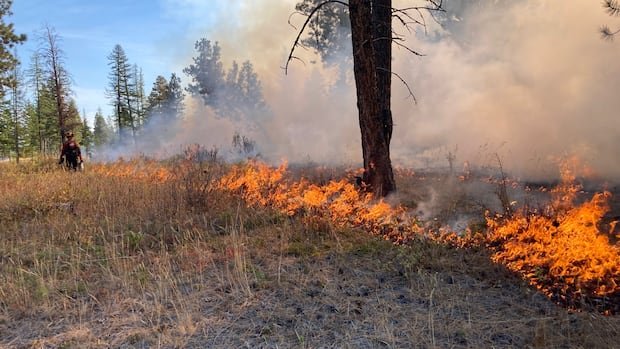
Prescribed burns, deliberate fires managed by trained specialists, serve to clear combustible materials like dead vegetation to mitigate wildfire risks. Indigenous communities have long employed this technique for land management. Bob Gray, a wildland ecologist overseeing prescribed burns in B.C.’s Interior, emphasized the effectiveness of these burns in fire prevention.
Gray explained that prescribed burns can significantly reduce the likelihood and severity of wildfires for several years in many ecosystems. However, due to a hiatus in burn management practices since the mid-1990s, the province is reacquainting itself with this strategy.
Engaging in a prescribed burn involves a series of steps, including collaboration with local authorities, consultation with First Nations, and adherence to regulatory protocols. Despite the necessary procedures, the bureaucratic process can be cumbersome, potentially hampering timely approvals.
Acknowledging the challenges posed by bureaucratic layers, the B.C. Wildfire Service recognizes the importance of balancing multiple interests and values in decision-making processes. Efforts are being made to enhance coordination through initiatives like the inter-ministry advisory committee established in 2024.
With the severity of the ongoing wildfire season, it is anticipated that the province will reassess existing hurdles in the near future. Gray anticipates adjustments and improvements as prescribed burns become an integral part of wildfire prevention strategies.