

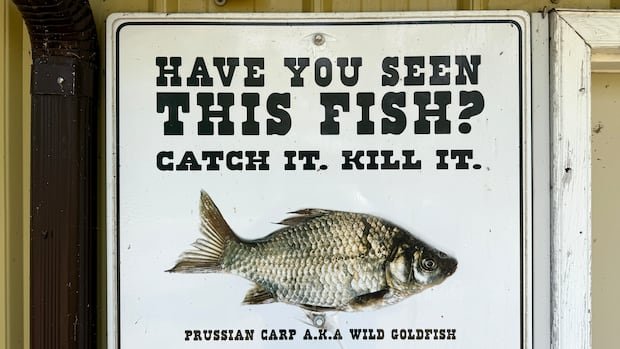

In eastern Alberta, a team of researchers is employing a hands-on approach to tackle the growing population of invasive Prussian carp at Blood Indian Creek Reservoir. Using traps baited with corn and cat food, the team swiftly dispatches each captured carp with a precise knife strike to the brain stem.
Allison Campbell, the team leader from Medicine Hat College, emphasized the necessity of targeted removal methods due to the absence of a one-size-fits-all solution. The team is experimenting with a novel net system to extract and eliminate carp while also identifying potential future fishing locations for the invasive species within the reservoir.
Once a renowned trout fishery, the reservoir has seen a significant decline since the introduction of carp in 2012. John Armstrong, who managed the park for over three decades, described the detrimental impact of carp invasion on the once-thriving ecosystem.
Prussian carp, known for their rapid proliferation, disrupt the natural balance by depleting food sources and altering habitat conditions. These bottom feeders not only affect water quality but also pose a threat to native fish populations, such as trout.
Efforts to control the carp population at Blood Indian Park have included the removal of a substantial number of carp in recent years, with ongoing stocking of trout and walleye. However, the decline in sportfishing and dissatisfaction among visitors signal the urgent need for effective management strategies.
Carp infestations have spread throughout central and southern Alberta, prompting the government to prioritize prevention measures against invasive species like zebra mussels. Researchers plan to continue their study at Lake Newell, with a focus on active management rather than eradication tactics.
The team is exploring innovative solutions, such as a specialized net system, to selectively target invasive carp while minimizing harm to native species. By refining their approach and monitoring carp populations, they aim to develop a sustainable strategy for preserving the ecological balance at Blood Indian Creek Reservoir.