

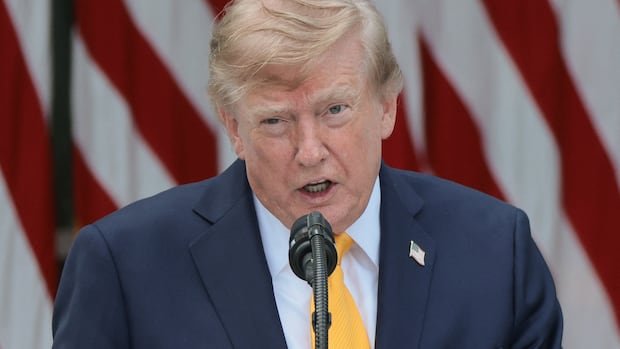

The White House released a statement on Tuesday detailing longstanding grievances against Canada for alleged trade infractions. This move further escalated the ongoing trade dispute between the two nations. Talks on tariffs broke down recently, with Prime Minister Mark Carney withdrawing, citing unreasonable demands from the U.S.
The White House’s assertions about Canada vary in accuracy. While some are factual, others represent President Donald Trump’s longstanding opinions or debatable claims. Let’s delve into the key points highlighted in the White House statement.
Regarding retaliatory measures, the White House noted that Canada, alongside China, opted for retaliation over negotiation, a stance supported by the current situation. Despite ongoing negotiations with the U.S., Canada’s stance aligns with retaliatory actions against tariffs imposed by the U.S.
The statement accused Canada of imposing discriminatory tariffs of 25% on U.S. vehicle imports, labeling the move as unfair due to its exclusivity. However, this tariff was a response to a similar action taken by the U.S. earlier. Discussions aimed at reducing or eliminating this tariff collapsed recently.
Following the imposition of new tariffs by Trump in 2025, Canadian provinces notably removed U.S. alcohol from government liquor store shelves. This move significantly impacted U.S. alcohol exports to Canada, with many provinces maintaining the ban until substantial tariff reductions are achieved.
The White House reiterated Trump’s criticism of Canada’s dairy industry, emphasizing the high tariffs on U.S. dairy imports. While Canada does impose tariffs beyond a certain limit, the U.S. can export dairy tariff-free up to that threshold. The U.S. objects to restrictions on its retailers selling dairy in Canada, citing unfair treatment compared to the EU.
Trade deficit concerns were also raised, with the White House highlighting the persistent goods trade deficit with Canada, averaging around $50 billion annually. Notably, a significant portion of this deficit stems from U.S. oil imports from Canada, providing an economic advantage to the U.S.
The White House statement concludes with claims that cannot be definitively fact-checked, presenting opinions or debatable assertions. Despite assertions of U.S. leverage due to its larger economy, the debate on trade war dynamics remains unsettled.
In summary, the White House’s statement underscores the deepening trade tensions between the U.S. and Canada, highlighting various contentious trade issues that have fueled the ongoing dispute.