

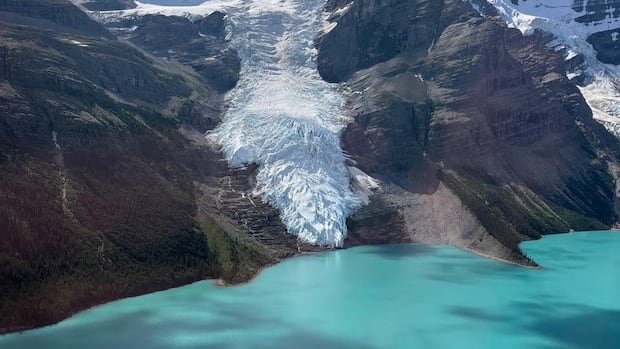

In British Columbia, a significant change is taking place at Mount Robson, as researchers have discovered that the Berg Glacier no longer extends all the way to Berg Lake. Joseph Shea, a geography associate professor at the University of Northern British Columbia (UNBC), observed this separation during a field project this summer.
Located on the north face of Mount Robson, the highest peak in the Canadian Rockies, the Berg Glacier used to reach Berg Lake, where ice would regularly break off and fall into the water, creating icebergs. This picturesque area, including the popular 23-kilometre Berg Lake Trail, attracts outdoor enthusiasts.
Recent studies by UNBC researcher Brian Menounos reveal concerning glacier melt trends. Between 1985 and 2021, about 22 percent of glacier surface area in Western Canada and Switzerland has vanished. Climate change has also impacted the Berg Lake Trail, causing severe damage from flooding during the 2021 heatwave.
Efforts are underway to mitigate these effects, with researchers supporting B.C. Parks in deploying real-time weather stations to monitor environmental conditions. By collecting data on snowpack, temperature, humidity, and more, park officials can make informed decisions to ensure visitor safety and preserve the natural beauty of Mount Robson Provincial Park.