

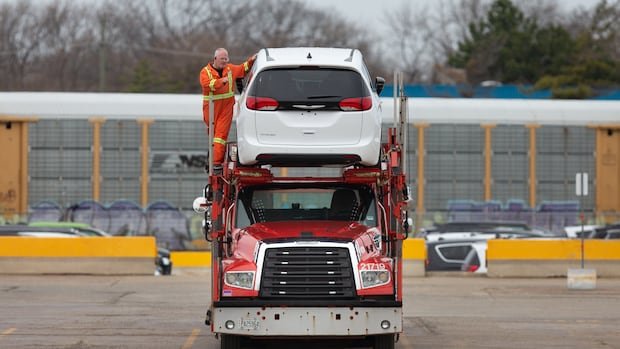

U.S. Trade Representative Jamieson Greer’s recent statements regarding Canada’s automotive industry indicate that its deep integration within North America could pose a significant obstacle if negotiations resume. President Donald Trump and Commerce Secretary Howard Lutnick have consistently expressed a desire to relocate Canadian auto manufacturing jobs to the United States.
In an exclusive interview with CBC News, Greer discussed the future of the integrated auto sector between the U.S. and Canada. He highlighted the significant gap in manufacturing employment in the U.S., particularly in the auto industry. Greer emphasized the administration’s focus on revitalizing American industries, acknowledging the impact of globalization on states like Michigan, Ohio, Pennsylvania, and Wisconsin.
Regarding the Trump administration’s objectives, Greer clarified that the goal is to “re-industrialize” in general, rather than exclusively targeting Canadian auto manufacturing. Despite Canada’s efforts to secure concessions from the U.S., Greer emphasized prioritizing America’s interests while accommodating Canada to a reasonable extent.
Greer, who led the unsuccessful trade talks, addressed outstanding issues such as U.S. tariffs on finished vehicles and Canadian auto parts. Disputes arose over the inclusion of heavy- and medium-sized trucks in tariff reductions, which are crucial for Ontario plants employing thousands of workers.
Flavio Volpe, president of the Automotive Parts Manufacturers’ Association, noted that the Trump administration’s intentions regarding Canadian car production are clear. Trump’s stance on domestic car manufacturing was reiterated, emphasizing the desire for self-sufficiency in the auto industry.
Industry responses varied, with Brian Kingston of the Canadian Vehicle Manufacturers’ Association expressing optimism about the potential partnership in re-industrialization efforts. He stressed the importance of strengthening the interconnected auto industries of both countries to maintain competitiveness.
Despite the breakdown in negotiations and threats of increased tariffs, industry representatives remain hopeful for a resolution. Kingston emphasized the need to resume discussions and avoid escalating retaliatory measures that could harm the North American auto sector.
Volpe echoed the sentiment, emphasizing the interconnectedness of the Canadian and American auto industries. He emphasized the importance of collaborative solutions and shared responsibility in the trade agreement process.
Overall, stakeholders remain cautiously optimistic about the future of Canada-U.S. trade relations, acknowledging the need for mutual cooperation and strategic decision-making in the automotive sector.