

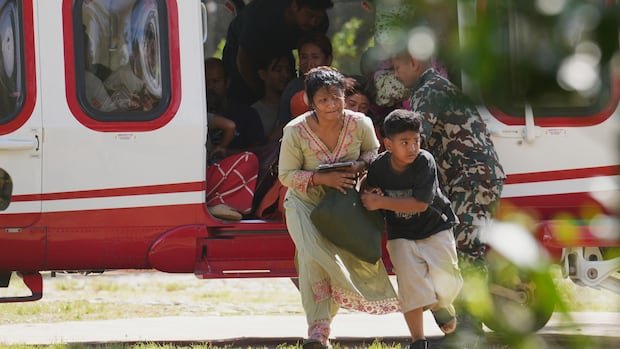

Rescuers continued their efforts on Friday in regions hit hard by a catastrophic flash flood along the Himalayan border between Nepal and China. The search for hundreds of missing individuals persisted as the death toll climbed, and authorities raised concerns about a newly formed, overflowing lake that could lead to more flooding.
According to Nepal police, the death toll in the country had increased to 469 from 390 the previous day, with more bodies being recovered among the debris. Meanwhile, China has maintained its report of three deaths in Tibet. Combined, the two nations have reported over 1,500 people missing.
Authorities in Nepal and China issued warnings about potential further flooding from a lake that emerged upstream after the disaster on Wednesday and was already overflowing. People in areas at risk were advised to relocate to safer areas. The Chinese Ministry of Water Resources stated that the lake held approximately 2 million cubic meters of water and was expected to receive an additional 3 million cubic meters over the next three days.
Chinese state broadcaster CCTV disclosed that the lake was situated at an elevation of 2,950 meters, about 1,000 meters above Gyirong Port, the border crossing with Nepal that was inundated by mud and floodwater.
In Nepal, the National Disaster Risk Reduction and Management Authority mentioned that 3,253 individuals had been airlifted by helicopter from the affected areas. Among those rescued were flood survivors, including the injured, who were transported to Kathmandu and other locations. Many missing individuals, including 30 Canadians and permanent residents, were identified by Global Affairs Canada.
The affected region is popular among hikers and pilgrims traveling to Mount Kailash in Tibet, a sacred location for various religious beliefs. The Nepal Army dispatched a team to the Upper Trishuli-1 Hydropower Project near the Nepal-China border to investigate reports of people trapped inside a tunnel.
Videos of the disaster showed floodwaters ravaging structures, bridges, and vehicles as people fled the rising waters. Following the tragedy, debris and mud covered buildings and streets, with broken concrete strewn about.
Survivors recounted harrowing experiences, such as customs officer Karbir Gaire, who narrowly escaped the disaster in Timure, the nearest Nepalese village to the Chinese border. Gaire described the event as akin to a Hollywood movie scene and emphasized the devastation caused by the “tsunami-like” flood.
Families worldwide anxiously awaited news of missing loved ones, with many individuals unaccounted for in the aftermath of the flood. The tragedy has left many people reeling from the sudden loss of family members and friends, with some still awaiting information on their whereabouts.
The flooding was attributed to a collapse of bedrock beneath a glacier high in the Himalayas, resulting in part of the glacier breaking off. The displacement of rocks and melted water led to swollen rivers downstream, causing widespread destruction along their path.