

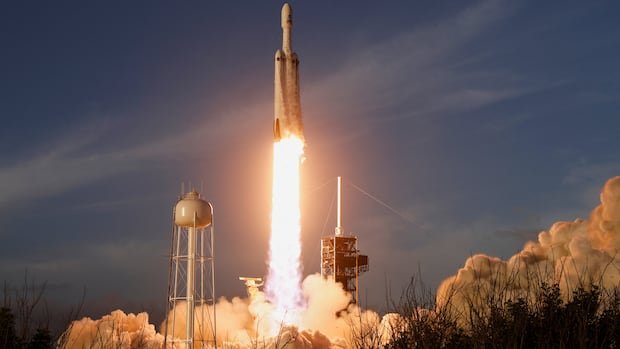

NASA initiated a fresh endeavor to explore key aspects of astrophysics and cosmology by launching the new flagship astronomical observatory on Sunday. The Nancy Grace Roman Space Telescope, a $4 billion US project, was sent into space from NASA’s Kennedy Space Center in Cape Canaveral, Florida, using a SpaceX Falcon Heavy rocket. The telescope’s primary mission is to last for five years, with a potential extended duration of another five years based on its fuel capacity.
The telescope’s purpose is to delve into cosmic mysteries like dark energy, dark matter, gravitational studies on large scales, and the search for exoplanets beyond our solar system. The observatory, originally intended for a spy satellite program under the National Reconnaissance Office, was repurposed by NASA for celestial exploration after the original program was terminated due to budgetary issues.
Named after NASA’s first chief astronomer, the Roman telescope will journey towards Lagrange Point 2, approximately 1.6 million kilometers from Earth. Over the next 90 days, mission scientists will commission the telescope and prepare for its scientific operations, aiming to transmit its initial high-resolution images before the winter holidays.
NASA Administrator Jared Isaacman expressed confidence that the Roman telescope would join the ranks of renowned orbiting observatories such as the James Webb Space Telescope and the Hubble Space Telescope. Roman is expected to offer a broad view of the cosmos, surveying the Milky Way galaxy in a month, a task that would take Hubble a century to accomplish.
Roman’s launch, nine months ahead of schedule, came after Congress preserved its funding despite attempts by the Trump administration to cancel or reduce it. The telescope will play a crucial role in studying dark energy, dark matter, and conducting an extensive search for exoplanets, potentially unveiling thousands of new planets and providing valuable insights into planetary systems similar to our own.