

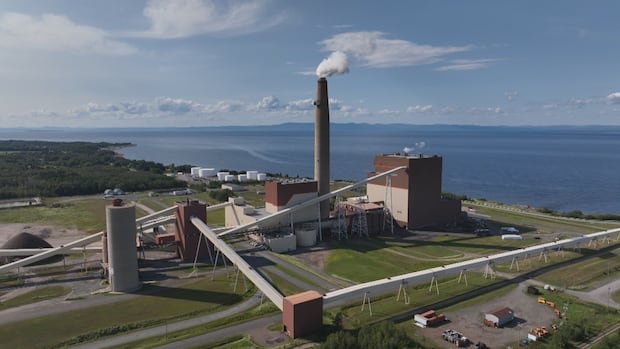

Time is ticking for a major Canadian power plant known for its high pollution levels. Two Mi’kmaw bands in New Brunswick are eyeing an Indigenous-owned transportable nuclear power station as a means to assist Canada in its commitment to adopting cleaner energy sources.
Leaders from Pabineau (Oinpegitjoig) and Eel River Bar (Ugpi’ganjig) are contemplating hosting a small modular reactor (SMR) near the Belledune generating station. The Belledune station is mandated to cease coal burning by 2030. In the initial phase, the proposed station could cater to the baseload power needs of approximately 40,000 households.
Chief Terry Richardson from Pabineau expressed concern over the significant CO2 emissions and sees potential benefits in sharing the prosperity if the project progresses. He envisions broader participation among First Nations communities in New Brunswick.
SMRs are named for their scaled-down power output compared to full-scale nuclear reactors like N.B. Power’s Candu-6. These reactors can meet up to 40% of New Brunswick’s electricity requirements.
Prodigy Clean Energy, a Canadian firm engaging with First Nations members, envisions a subsequent project phase involving a commercial fleet of transportable nuclear power plants assembled at the Port of Belledune and shipped globally.
Although unproven within the G7 nations for timely and budget-friendly construction, Prodigy Clean Energy, backed by federal funding of $2.75 million, has gained the bands’ trust and attention.
Karen Narvie, an Eel River Bar band councillor, lauded Prodigy’s transparent partnership offer during community meetings, sparking increased interest in touring the Point Lepreau nuclear generating station and SMR suppliers in Ontario.
The Darlington New Nuclear Project aims to establish four SMRs, with partial ownership by seven Ontario First Nations. Pabineau and Eel River Bar leaders anticipate a similar equity stake in a New Brunswick nuclear initiative.
Narvie emphasized the necessity for projects benefiting the community’s overall well-being, highlighting needs such as enhanced health services, housing, and facilities like an ice rink.
Canada’s recent nuclear energy strategy, released on June 26, outlines plans for up to 10 new large-scale reactors, with at least one potentially being an SMR outside Ontario by 2035. Funding details are yet to be disclosed, with a draft policy due by next April emphasizing economic reconciliation through Indigenous capacity-building and participation in the nuclear sector.
Mathias Trojer, President of Prodigy Clean Energy, sees the potential for a New Brunswick-based transportable nuclear power plant to align with national objectives, delivering power to remote regions and aiding in mineral exploration and defense applications.
René Legacy, New Brunswick Energy Minister, highlighted Canada’s interest in exploring floating nuclear power plants like those deployed in Russia, suggesting northern New Brunswick as a potential test site.
New Brunswick has invested over $31 million in two SMR vendors, ARC Clean Energy and Moltex, to stay engaged in SMR development discussions. Legacy assured that taxpayers won’t solely fund nuclear projects lacking a viable business case.
Residents of Eel River Bar, including Narvie, are seeking further clarification on safety, security, and environmental impacts of the proposed nuclear project, particularly concerning water and land protection, fishing, hunting, and foraging rights.
Following upcoming community visits to nuclear facilities, Eel River Bar is poised to provide additional feedback on the nuclear project.