

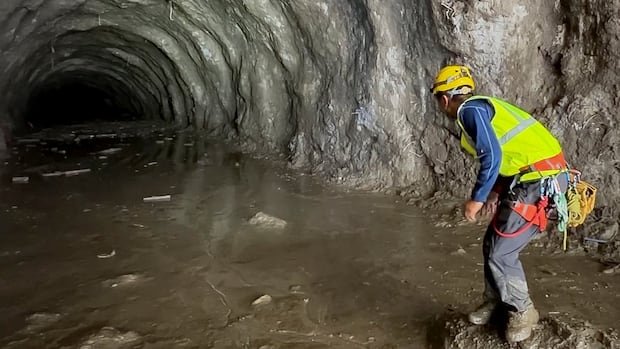

Rescuers are in a race against time to reach workers suspected to be trapped in tunnels at hydropower locations buried under mud following devastating floods in Nepal and China. The death toll has surpassed 900 in both countries, with over 4,700 individuals missing. The Independent Power Producers’ Association (IPPA) in Nepal has reported that around 900 workers are unaccounted for from 12 damaged hydropower projects in Rasuwa and Nuwakot districts.
According to Mohan Kumar Dangi, the President of IPPAN, estimates suggest that approximately 500 of the missing workers could be stuck in the tunnels. While authorities have provided varying figures, several foreign teams are aiding Nepali rescuers in the search efforts. Despite some workers managing to communicate for help when the disaster struck, concerns are rising that some may have succumbed to suffocation after six days.
Rescue operations have been concentrated on locating individuals trapped inside the extensive tunnels designed for water management to generate hydropower. These tunnels are spacious enough to accommodate people seeking shelter, with efforts to provide oxygen to those stranded inside. In the Upper Trishuli-1 Hydropower Project in Rasuwa, where at least 576 are missing, a significant number are believed to be trapped within the project’s tunnel.
On the Chinese front, reconstruction efforts include restoring the road to Gyirong Port, with workers paving a section of the road amidst rising waters due to recent heavy rainfall. While some rescue teams have reached the border, challenges persist due to the flooded road hindering access.
The catastrophe, triggered by a glacial collapse in the Himalayan region, resulted in torrential floods that swept through buildings and infrastructure in Tibet and Nepal. The disaster has left families anxiously searching for their missing loved ones, with rescue teams working tirelessly to locate survivors in the challenging terrains.