

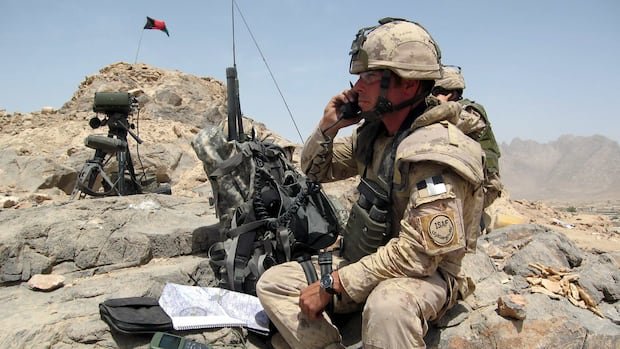

As Canadian soldiers advanced across the Arghandab River, former corporal Bruce Moncur was alerted to potential danger by the unexpected sight of a green pen flare lighting up the sky. Moncur, who served in Afghanistan, recognized that the green flare was a signal from Taliban fighters, as NATO typically used red flares. This indicated that they had walked into a trap set by the Taliban.
The incident took place during the initial stages of Operation Medusa, a fierce battle that unfolded in the vineyards and villages of Kandahar. Moncur vividly remembers the events of that day, which occurred two decades ago, with vivid clarity.
The operation commenced on September 2, 2006, with heavy artillery and air strikes. The following day, Moncur’s unit embarked on crossing the river, only to encounter a well-entrenched enemy force that unleashed a barrage of machine gun fire, rocket-propelled grenades, and small arms.
Unlike previous encounters, the Taliban fighters chose to stand their ground and engage in direct combat. The battle involved more than 2,000 NATO troops, including over 1,000 Canadians, alongside Afghan and other coalition forces. It marked the largest battle undertaken by Canadian troops since the Korean War and was a significant conventional operation during the Afghan conflict.
During the intense five-hour firefight that ensued after crossing the river, four Canadian soldiers lost their lives, and 16 others were wounded before the order to retreat was given. Moncur’s unit, part of the 1st Battalion Royal Canadian Regiment (1RCR), was lured into the ambush while advancing towards their target, an occupied schoolhouse.
Following the battle, discussions arose regarding the unexpected strength and resilience of the Taliban fighters, estimated to number around 1,000 insurgents. The encounter highlighted the challenges faced by the Canadian troops, many of whom were experiencing combat for the first time.
In the lead-up to the battle, insurgents had amassed in strategic districts near Kandahar city, fortifying their positions and preparing for a confrontation with NATO forces. The timing of the attack coincided with the transition of responsibility from the U.S.-led coalition to NATO, testing the resolve of the alliance in the face of a determined enemy.
The engagement in Pashmul showcased a different caliber of Taliban fighters, characterized by superior training, coordination, and equipment. Questions arose regarding the possible involvement of Pakistan’s intelligence service in bolstering the insurgency and contributing to the tactical sophistication of the Taliban forces.
The aftermath of the operation revealed the toll of friendly fire, as an American aircraft mistakenly targeted Canadian positions, resulting in casualties, including Moncur who sustained a severe head injury. Despite the chaos and confusion of the battlefield, Moncur survived the ordeal and underwent a lengthy recovery process.
The battle of Operation Medusa proved to be a pivotal moment in the Afghan conflict, shifting the dynamics of the war and forcing the Taliban to reassess their strategies. The resilience and sacrifices of the Canadian troops left a lasting impact, both militarily and politically, signaling a commitment to supporting the Afghan people in their fight against insurgency.