

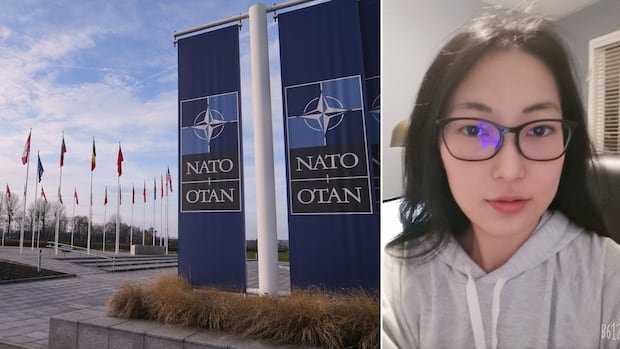

Several Western intelligence agencies have been in a frenzy this summer trying to determine the extent of information accessed by an accused Canadian spy during her internships at various agencies and government departments. Biwei Zhang, a Canadian intern at NATO’s headquarters in Mons, Belgium, was arrested by Belgian authorities in July on suspicion of espionage and ties to a foreign criminal entity. She has been in pretrial detention since her arrest and recently had an appeal for release denied.
Authorities in Belgium have been tight-lipped about Zhang’s case, but a CBC News investigation in late July identified her through publicly available records. Zhang has had roles as an economist at Statistics Canada, a systems engineer at the Canadian Space Agency, and positions at the European Space Agency in Italy and the World Trade Organization in Switzerland.
While Belgian authorities have not disclosed the entity Zhang allegedly spied for, European media reports, citing intelligence sources, suggest it was China. The Canadian Security and Intelligence Service (CSIS) has confirmed that it is overseeing a comprehensive damage assessment across multiple government departments.
Intelligence experts are conducting investigations to ascertain the extent of Zhang’s access, potential damage caused, and any connections she may have had to a broader network. The focus is shifting towards understanding what information she may have seen and whether there were collaborators involved.
Public discussions in Canada have centered on how Zhang obtained security clearance, with a parliamentary committee planning hearings on the matter. Meanwhile, intelligence services are more concerned with the implications of what Zhang may have observed and the possibility of accomplices.
As the investigation unfolds, questions arise about Zhang’s activities at various agencies and the retention of security data. Experts are keen on reconstructing her movements and activities to determine the scope of her alleged espionage.
The case has raised concerns about potential ties to Chinese military intelligence and the involvement of third-party criminal organizations. Networks cooperating with Chinese intelligence agencies have been identified in Europe, emphasizing the need for thorough investigations.
Authorities are also evaluating the significance of Zhang’s roles in IT and cybersecurity, considering China’s strategic approach to cyber espionage. The focus is on stealth intrusions and establishing a foothold for cyberattacks, highlighting the challenges of defending against insider threats.
Recent reports suggest that Zhang’s suspicious behavior at SHAPE and her interactions with military personnel have prompted counterintelligence investigations, with suspicions of possible accomplices emerging.