

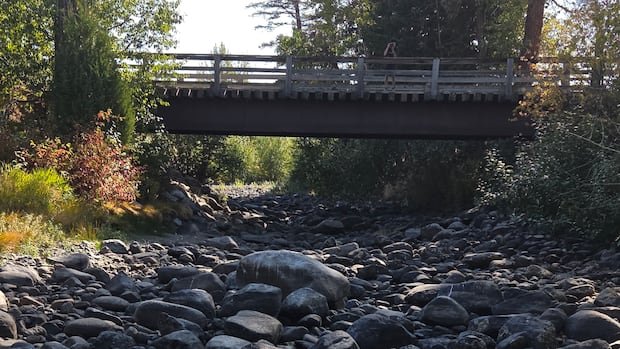

Residents living along the Nicola River in British Columbia’s Interior are facing unprecedented drought conditions. Chief Nicholas Peterson of the Lower Nicola Indian Band described the situation as a dire emergency during the band’s recent salmon festival. The river levels were so low that the backs of spawning salmon were visible above the water, indicating a critical situation.
Chief Peterson expressed concerns about the declining river levels, emphasizing the fear and scarcity among the community members. He mentioned that streams are drying up rapidly, a phenomenon never witnessed before. The struggling salmon, much smaller than usual, are not only a vital food source but also hold cultural significance for many First Nations communities in the region.
Brian Holmes, a councillor with the Upper Nicola Indian Band, highlighted the near-complete drying of the Nicola River, which has been a lifeline for the community for centuries. The absence of water has devastated the ecosystem, with all living creatures disappearing from the area. Holmes emphasized the river’s importance as the main artery for the Nicola watershed.
Holmes and Peterson suggested a potential solution to the water scarcity issue by advocating for increased water storage capacity through more reservoirs. This approach aims to capture and store water during periods of abundance, alleviating the strain on the ecosystem and fish during droughts. The Nicola Watershed Governance project, a collaborative effort involving various Indigenous bands and the British Columbia government, is working on implementing this solution.
Holmes stressed the need for proactive measures and financial commitments to address climate change-related challenges like water scarcity and toxic algal blooms. He emphasized the importance of ensuring a healthy environment for future generations by prioritizing these issues.