

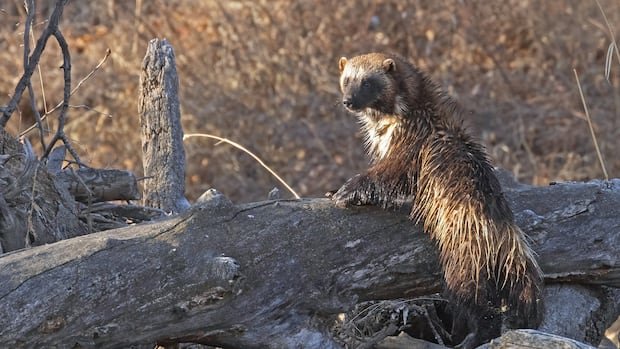

A recent study reveals that activities such as skiing, snowshoeing, and snowmobiling in remote areas are impacting wolverines more significantly than previously assumed. The research conducted in the Columbia and Rocky Mountain ranges, including Banff National Park, indicates that regions with higher recreational and road usage have fewer wolverines present.
While it was already known that wolverines tend to avoid human contact, the study suggests that the implications extend beyond mere avoidance of hikers on trails. According to Mirjam Barrueto, the lead researcher at the University of Calgary collaborating with Parks Canada, the impact of recreation on wolverines is more significant than previously believed.
The study covered an extensive area of 80,000 square kilometers, known for being favorable habitat for wolverines, where scientists initially estimated a population of around 500 to 600 wolverines. However, the study results show that only approximately 300 wolverines inhabit this region.
The research found that winter activities have a more pronounced impact compared to summer activities. Barrueto highlighted that winter recreation, with its broader reach due to snow cover, poses a greater threat to wolverines, as winter activities like skiing and snowmobiling can encroach deeper into the backcountry.
Female wolverines, especially during the winter when they den and raise their young, are particularly susceptible to disturbance. The study suggests that disturbances caused by human activities may lead female wolverines to abandon their dens or alter their behavior to avoid encounters, which can negatively impact their ability to care for their offspring.
To mitigate the impact on wolverines, Barrueto proposed temporarily restricting access to sensitive areas during the critical winter months when female wolverines are most vulnerable. The study also noted a decline in female wolverine numbers with an increase in road density, unlike male wolverines.
Experts emphasize the urgency of conservation efforts, as the study area, primarily undisturbed land, serves as a crucial habitat for wolverines. Jason Fisher, a wildlife ecologist from the University of Victoria not associated with the study, expressed concern over the diminishing wolverine population in protected areas like the Rocky Mountains.
Barrueto emphasized that even minimal human activity, rather than the sheer number of individuals, can impact wolverine populations. Promoting responsible recreational practices, such as staying on designated trails and avoiding off-trail excursions, is crucial to safeguarding wolverine habitats.
In addition to habitat protection, addressing other threats like trapping, hunting, and vehicle collisions is essential for wolverine conservation. Fisher stressed the need for immediate action to preserve wolverines, a resilient species that has survived for millennia in the mountainous regions.
Efforts to protect wolverines are crucial to ensure the long-term survival of these remarkable animals in their natural habitats.