

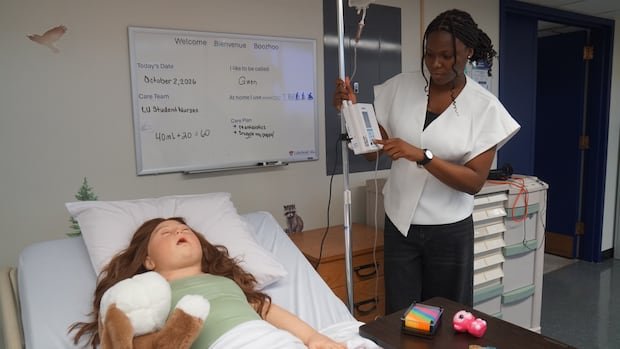

Lakehead University in Thunder Bay, Ontario, has introduced the upgraded specialties laboratory for its School of Nursing to enhance the training of future healthcare professionals. The newly renovated lab focuses on providing third-year students with simulated experiences in obstetrics and pediatrics.
Dr. Kristen Jones-Bonofiglio, the director of the nursing school, emphasized the importance of preparing students for the fast-paced clinical settings they will encounter, particularly in northern regions with high acuity levels. The goal is to ensure that students are equipped with the necessary confidence and skills to deliver safe and effective care when they transition to real patient interactions.
Enhancements to the Nursing Specialties Lab include advanced high-fidelity simulation technology and lifelike manikins, enabling students to practice clinical procedures and respond to various patient scenarios within a controlled educational setting. The lab features two types of manikins sourced from different companies, each offering unique levels of realism and engagement for the students.
The school’s commitment extends to ensuring that students are proficient in caring for individuals across all age groups and developmental stages. Notably, a manikin named Gwen represents a pre-teen with Down syndrome, alongside other manikins representing children and infants, allowing students to perform assessments, procedures, and interact with them realistically.
The laboratory also houses a child-birth simulator and an Anatomage Table, providing students with immersive experiences to explore human anatomy in 3D interactively. These resources aim to alleviate students’ apprehension about entering clinical practice by offering them a simulated environment to enhance their skills and knowledge.
Mmesoma Nwenonenyi, a fourth-year nursing student, expressed the value of the lab’s resources in preparing students for real-world healthcare settings. She highlighted the importance of gaining practical experience and knowledge through simulations to feel confident and competent when caring for patients.
The utilization of manikins and advanced learning tools not only aids in student preparedness but also contributes to improved patient outcomes by fostering a better understanding of clinical scenarios and collaboration within healthcare teams. The immersive learning experiences provided by the lab are essential for enhancing students’ skills and confidence as they prepare to enter the healthcare field.