

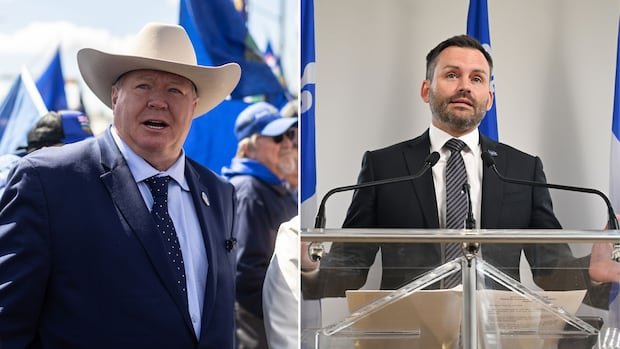

Prominent advocates for Alberta’s separation movement are commending the recent victory of Quebec premier-designate Paul St-Pierre Plamondon. Jeffrey Rath from the Alberta Prosperity Project remarked that St-Pierre Plamondon’s win could have a significant impact on Canada’s political landscape, especially given his expressed support for Alberta’s independence. Rath highlighted that this marks the first time in Canadian history that a Quebec government endorses Alberta’s sovereignty.
Following the recent Quebec election, St-Pierre Plamondon and the separatist Parti Québécois are poised to establish a minority government. St-Pierre Plamondon has committed to organizing a third independence referendum for Quebec, though it is contingent on U.S. President Donald Trump no longer holding office.
During a past visit to Calgary, St-Pierre Plamondon stated that he would recognize an autonomous Alberta if its residents voted for separation. Rath mentioned having conversed with the Parti Québécois leader in Calgary, emphasizing their ongoing communication and predicting St-Pierre Plamondon’s effective governance.
Corey Morgan, a separatist advocate involved in Alberta’s upcoming referendum, echoed Rath’s sentiments, expressing optimism about St-Pierre Plamondon’s alignment with their cause. Morgan emphasized the importance of sustaining pressure on the federal system for independence movements across Canada.
The upcoming referendum in Alberta on October 19 will determine whether the province remains part of Canada or proceeds with a binding vote on secession. Alberta Premier Danielle Smith, who supports the province remaining within Canada, initiated the referendum following substantial public engagement on both sides of the separation debate.
Smith congratulated St-Pierre Plamondon on his victory and expressed eagerness to collaborate with his government. Notably, neither Smith nor Prime Minister Mark Carney directly addressed the separation issue in their social media acknowledgments.
Morgan criticized the avoidance of the separatist aspect of the Quebec election by Smith and Carney, emphasizing the potential policy implications of an overtly separatist party governing Quebec. Rath drew parallels between Quebec’s election outcome and the dynamics within Alberta’s United Conservative Party, suggesting a potential shift in Alberta’s political landscape.
Despite Smith’s affirmation of federalist commitments within the UCP, internal calls for a leadership review and growing separatist sentiments among party members indicate potential divisions. Rath anticipates intriguing developments in Alberta politics given the prevailing sentiments within the UCP regarding independence.