

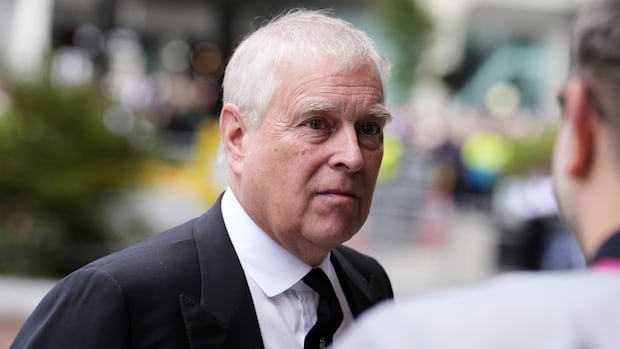

British authorities announced on Thursday that search warrants used to investigate properties associated with Andrew Mountbatten-Windsor were deemed unlawful and must be invalidated. However, the inquiry into King Charles’s younger brother remains active. Andrew, aged 66, was apprehended in February under suspicion of misconduct in public office related to his ties with the late American sex offender Jeffrey Epstein. Searches were conducted at residences in Sandringham and Windsor. This arrest of the high-ranking royal, eighth in line to the throne, marked a rare event in recent history, with worldwide media coverage depicting the somber-faced former prince leaving the police station.
The ongoing investigation by police focuses on Andrew’s tenure as a British special representative for trade between 2001 and 2011, anticipated to be a protracted and intricate process. Andrew, who has maintained silence since his arrest, initiated a legal challenge to contest the validity of the search warrants. Thames Valley Police acknowledged that the warrants were improperly issued by the courts and are now subject to legal proceedings for determining the handling of seized materials in support of the investigation.
During a hearing at London’s High Court, Judge Nicholas Hilliard addressed the police’s application to retain confiscated items, opposed by Andrew, with the resolution postponed until the following year. Thames Valley Police clarified that they retained materials not deemed relevant to the investigation, withholding them from the royal.
Despite the warrants’ annulment, the investigation continues, initiated following the disclosure of extensive documents by the U.S. Department of Justice concerning Epstein. Andrew, Queen Elizabeth’s second son, consistently refutes any wrongdoing in connection with Epstein, expressing regret over their association. Misconduct in public office, punishable by up to life imprisonment, encompasses various serious offenses, including divulging confidential data, corruption, and sexual misconduct.
Andrew allegedly encountered Epstein through British socialite Ghislaine Maxwell. His conduct while in their company drew scrutiny in 2011 when Virginia Roberts Giuffre, an American who worked for Epstein and Maxwell as a teenager, accused Andrew of sexual assault at the age of 17. Andrew denied the allegations but resolved the matter through a financial settlement in a U.S. civil lawsuit in 2022. Subsequently, he relinquished all official royal duties in 2019 due to his Epstein ties, following an ill-received BBC News interview. Last year, King Charles revoked Andrew’s titles and privileges, mandating his relocation from the lavish Royal residence in Windsor to a privately funded residence in Norfolk.
Epstein’s death in 2019, ruled a suicide, preceded Maxwell’s conviction on federal sex trafficking charges in New York, resulting in a 20-year prison sentence in 2022. Roberts Giuffre passed away at her Australian home last year, under circumstances classified as suicide. A U.S. congressional committee has interviewed various prominent figures connected to Epstein or Maxwell, such as former President Bill Clinton. While some committee members expressed interest in interviewing Andrew, the panel lacks the authority to compel his appearance.