

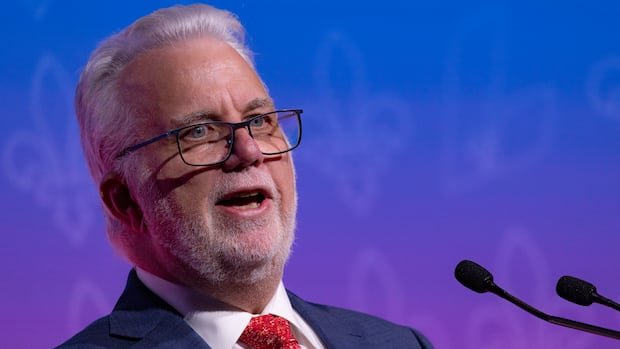

A former Quebec premier who was in charge when Canada’s first medically assisted dying law was enacted now expresses mixed feelings about the progress of the practice since then.
The law, passed by Quebec’s National Assembly in 2014, established the conditions for terminally ill patients to request medical assistance in dying (MAID).
Initially proposed by the Parti Québécois, the bill garnered bipartisan support during Philippe Couillard’s term as premier.
In an interview with CBC’s The House, the former premier reflected on his decision in 2014, expressing concerns about the significant expansion of MAID in Quebec and Canada since then.
He noted that the initial law was intended for terminal or pre-terminal cases with a clear path to the end of life, a scope that has since broadened.
Regarding his decision back then, he admitted, “I’m not sure that I would have again voted for that law with the extension that we have seen in the recent years.”

Canada is stopping the expansion of medical assistance in dying for people solely suffering from mental illness. Power & Politics hears from two members of the Special Joint Committee on MAID — Liberal MP James Maloney, who supports his government’s move, and Alberta Sen. Kristopher Wells, who says it goes against the wishes of Canadians.
Two years after Quebec’s law, the federal government passed its own MAID legislation following a 2015 Supreme Court ruling that deemed a ban on medically assisted dying unconstitutional.
Former Prime Minister Justin Trudeau consulted with Couillard before the adoption of the federal MAID law in 2016.
The federal legislation was invalidated by the Superior Court of Quebec in 2019 due to its restriction to cases where death was “reasonably foreseeable.” Subsequently, in 2021, a new law was passed to align with the court’s decision.
In 2024, Quebec went a step further, allowing advance requests for MAID before conditions like Alzheimer’s prevent consent.
<p class="paragraph-b3GxD