

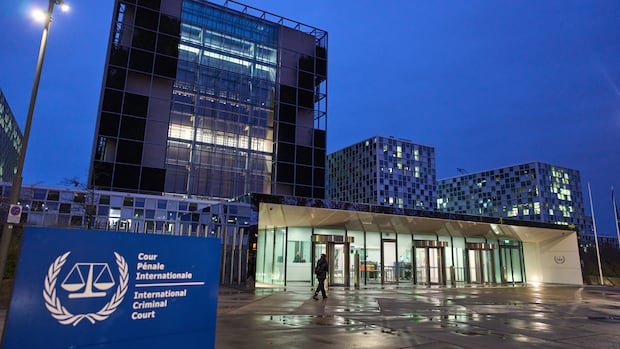

The Trump administration’s recent extensive sanctions on the International Criminal Court have sparked concern and dismay for Payam Akhavan. The Canadian, who serves as a special adviser on genocide at the ICC, expressed worry over the current challenges facing once revered institutions.
The U.S. government, according to Secretary of State Marco Rubio, is actively working to dismantle the ICC gradually. Despite this, Akhavan remains hopeful, emphasizing that there is still an opportunity for countries like Canada to show support for the court in the face of adversity.
In a significant move, the U.S. announced plans to sever ties between the ICC and American financial services, technology firms, and U.S. currency within six months. The ICC’s mandate includes investigating and prosecuting individuals implicated in war crimes, crimes against humanity, and aggression.
The U.S. administration’s efforts to undermine the ICC stem from its scrutiny of U.S. and allied actions, including those involving Israel. President Donald Trump vehemently opposes ICC arrest warrants issued for Israeli officials, including Prime Minister Benjamin Netanyahu, citing concerns about national sovereignty.
Despite not being signatories to the Rome Statute that established the ICC, the U.S. and Israel have strongly rejected the court’s authority over their nationals.
Following the imposition of sanctions, Canada, along with several other nations, issued a joint statement reaffirming their unwavering support for the ICC’s independence, impartiality, and integrity. However, Akhavan and other legal professionals in Canada are urging the government to go beyond words and take concrete steps to bolster the ICC, potentially through increased funding or other supportive measures.
The joint statement’s vagueness about tangible actions has led experts like Heidi Matthews to question its effectiveness. Matthews, with extensive experience in international law, highlights the need for clear commitments to uphold obligations under the Rome Statute, including the arrest and surrender of accused individuals.
She suggests that Canada should consider increasing financial assistance to the ICC and enacting legislation to shield Canadian ICC staff from U.S. sanctions. Such legislation could emulate the EU’s blocking statute, preventing Canadian entities from complying with extraterritorial laws.
Akhavan acknowledges the ICC’s imperfections but stresses that criticizing the court constructively is different from seeking its total dismantling, which he views as an attack on the foundational principles of international law.