


London-area defense companies are gearing up to seize opportunities as the federal government is set to exceed $163 billion in defense spending annually within ten years. CEO Karl Pfister of Armatec Survivability in Dorchester, Ont., noted the positive shift in military acquisition processes under the new government, fueling optimism among industry players.
Prime Minister Mark Carney’s $9 billion boost to defense funding last year aimed to align Canada with NATO’s 2% GDP target. Canada has now committed to a 5% GDP goal by 2035, dividing it into 3.5% for core defense and 1.5% for broader defense and security investments. The plan to convert the Defense Investment Agency into a Crown corporation was recently unveiled by the Liberals to enhance procurement contract negotiations.
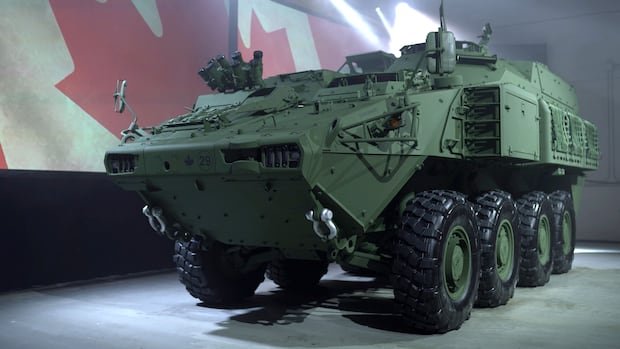
The increased defense spending and industry focus have fostered growth expectations among London-area firms. NP Aerospace CEO James Kempston highlighted the agility required in the defense sector, emphasizing the potential for expansion in Canada and globally. General Dynamics Land Systems (GDLS) anchors London’s defense sector, with recent lucrative contracts driving business growth.
London’s robust manufacturing workforce, strategic location, and research capabilities position it as a hub for defense equipment production. The region’s industrial strengths and specialization have attracted companies like Canada Rocket Company, set to establish a rocket engine test facility near London International Airport.
The executives believe that the evolving discourse on defense spending, influenced by geopolitical events like Russia’s actions in Ukraine, has contributed to a more supportive environment for increased investments in the defense sector. They emphasize the importance of showcasing Canadian innovation to international partners and protecting military personnel by fortifying the domestic defense industry.
The executives’ remarks underscore the critical role of the defense industry in safeguarding Canadian interests and values on the global stage, emphasizing the need for adequate equipment and capabilities to uphold national sovereignty.