


Driving east from Fredericton along Route 10 in the fall offers a spectacular display of autumn colors, with little else to distract you. As you approach Ripples, southwest of Minto near Grand Lake, a peculiar concrete structure and a couple of signs come into view. One sign indicates “Internment Camp B70.”
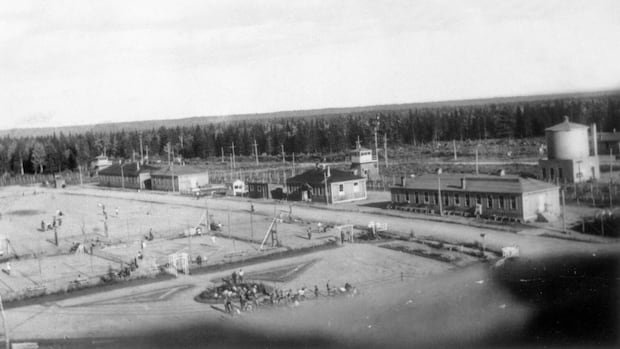
The concrete structure, once a water tower, is a remnant of a 24-hectare camp that confined hundreds of European refugees and prisoners of war during World War II. This camp, unique to the Maritimes, remains a lesser-known part of New Brunswick’s history.
Second-year law student Lidia Shibre, from the University of New Brunswick, expressed surprise upon discovering the proximity of an internment camp to their daily lives and studies. Shibre, along with her international humanitarian law class and UNB history students, visited the former camp as part of a project with the Gregg Centre, focusing on the study of war and its societal impact.
Professor David Matyas emphasized the significance of bringing students to the camp to understand the practical application of international humanitarian law, emphasizing its relevance in a local context. The visit aimed to provide insight into the Geneva Convention’s rules on internment and detention during wartime.
The camp, known as Internment Camp B70, served as a prison-like facility enclosed by barbed wire fencing, guard towers, and floodlights. Initially housing European Jewish refugees fleeing Nazi Germany in 1940, it later accommodated Germans and Italians from 1941 to 1945. Notably, some detainees were Canadian citizens who opposed the war effort.
One internee, Henry Kreisel, documented his experiences in a diary while at the camp. Kreisel, along with other internees, engaged in various activities within the camp, shedding light on their daily lives and struggles.
The group concluded their visit by exploring the New Brunswick Internment Camp Museum in Minto, showcasing artifacts from the internment camp era. Neil Waldshutz, a third-year history student, found the artifacts fascinating, offering a glimpse into the internees’ daily lives and challenges. The museum provided a poignant reminder of the hardships faced by those seeking freedom but ending up imprisoned in New Brunswick.