

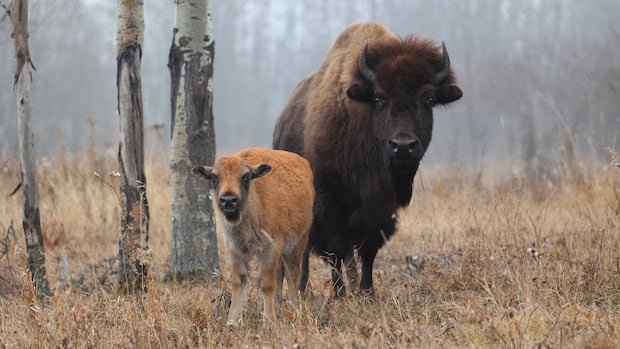

A long time ago, bison freely roamed North America in large herds, but were nearly wiped out due to extensive hunting. New research has decoded the DNA of these majestic creatures, revealing insights into how their populations collapsed and slowly reemerged across the landscapes they once dominated.
Published in the journal Science, the study involved sequencing 160 bison genomes, spanning a timeline of 20,000 years. Led by paleogeneticist Jonas Oppenheimer and the Paleogenomics Lab at the University of California, Santa Cruz, the research engaged nearly 40 scientists, many of whom were Canadian.
The aim of the research is to aid modern conservation efforts by understanding the complex genetic history of bison. The findings highlight the challenges faced by modern bison herds, which have become isolated in managed populations, affecting their resilience.
Sequencing the genomes allowed scientists to map how the biological diversity of bison has evolved over time. DNA was extracted from both ancient bison bones and living herds in Canada and the United States, including managed populations and wild herds.
The study, which included sequencing 115 ancient bison genomes and 45 modern genomes, revealed that genetic diversity has been preserved despite the historical population declines. However, the genetic differentiation seen today in bison herds is a result of their recent fragmented history.
The research also unveiled a significant split between wood bison and plains bison, showing distinct adaptations to different environments. Efforts are underway to manage these subspecies separately and preserve their unique genetic signatures.
The study’s co-author, bison geneticist Greg Wilson, emphasized the importance of maintaining genetic diversity and preventing inbreeding among isolated herds. By utilizing ancient genomes, conservationists can work towards restoring genetic connectivity among bison populations and promoting wilderness diversity.