

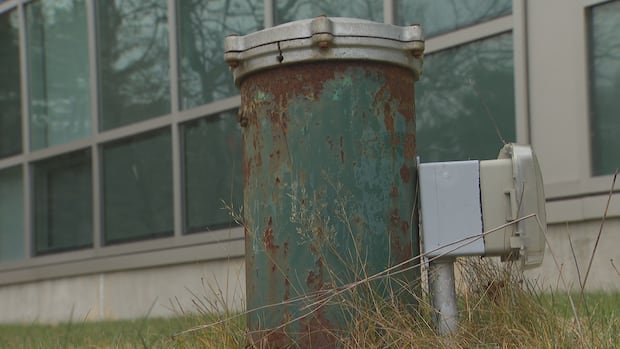

The cost of a new community well project in Shelburne has surged by almost double following the withdrawal of one partner. However, the group managing the initiative remains optimistic about its progress.
Situated on the NSCC Shelburne campus, the drilled well is now a collaborative effort involving the town and district of Shelburne, along with the South End Environmental Injustice Society (SEED).
A recent update presented to the Municipality of the District of Shelburne council in late September revealed that the project expenses have escalated from approximately $241,000 to $453,800.
Louise Lindsay, SEED’s vice-president, explained that the cost hike occurred because their group had to engage Dillon Consulting to oversee the project and assume various responsibilities after the NSCC exited last year.
Lindsay emphasized in a recent interview that despite the increased expenses, they are determined to proceed independently. She noted that the NSCC played a crucial role in assisting SEED with the initial grant application for provincial funding to make the well accessible to the public. The college was also supposed to manage the project and have carpentry students construct the pumphouse.
However, Lindsay revealed that provincial staff informed SEED last year about the NSCC’s decision to discontinue its involvement without providing a specific reason.
Kathleen Cameron, a spokesperson for NSCC, communicated via email to CBC that both the college and province concluded that assuming responsibility for a community water supply was beyond the college’s expertise and resources. The idea of a carpentry class supporting the project infrastructure was considered impractical.
With the NSCC’s withdrawal, the project costs now include Dillon’s services as project and contracting manager, a surge in pumphouse expenses from $30,000 to $100,000, increased backup power costs, and the transfer of the provincial land hosting the well to the District of Shelburne.
The transfer of property is contributing to the rising costs, as Lindsay explained, highlighting the additional $70,000 required for surveying and meeting the province’s property transfer standards.
Despite exploring other well options, Lindsay emphasized the exceptional water quality and volume of the NSCC well for the region. She stressed the importance of ensuring easy access to the well for residents in the south end of the Town of Shelburne and rural district inhabitants.
The province has already committed some funding to the project, with Lindsay expressing gratitude for the supportive stance of provincial staff from the Department of Environment & Climate Change. SEED is awaiting confirmation from the province regarding a potential increase in funding to cover 80% of the revised project cost.
Council for the District of Shelburne recently approved an increase in project funding from about $10,900 to $25,000, responding to SEED’s request to accommodate the heightened expenses.
Municipal staff indicated that once all funding is secured and the provincial cabinet sanctions the land transfer promptly, construction on the well could commence by next spring, as hopes are high for the long-awaited realization of the project.
SEED has also enhanced its financial contribution to the well project from $17,600 to $40,000, which includes the remaining amount from a donation made by Nova Scotia actor Elliot Page back in 2019 to facilitate the well’s establishment. Lindsay confirmed that Page’s commitment to provide annual maintenance funds of $5,000 remains unchanged.
The original objective of the well project was to support the African Nova Scotian community residing in Shelburne’s south end, addressing concerns about potential water contamination from an old dump site and its alleged link to elevated cancer rates.
At a public meeting in June, experts reported that water testing conducted in the fall of 2025 and spring of 2026 revealed no significant levels of metals like iron, manganese, and arsenic, which occur naturally. Additionally, it was disclosed that cancer rates in Shelburne, except for bladder cancer, align with provincial averages, though bladder cancer rates are comparatively higher in southwest Nova Scotia.
Furthermore, the region’s demand for accessible potable water is underscored by the frequent drought conditions faced by the South Shore, often resulting in dry shallow wells for residents.
In conclusion, the community is eagerly anticipating the completion of the well project, with the collective efforts of all involved parties aimed at fulfilling the critical need for clean and reliable water access in Shelburne.