

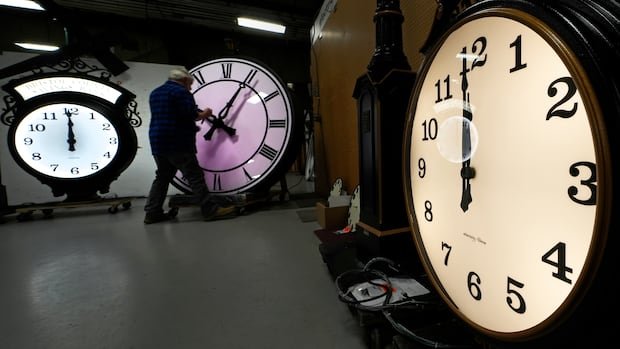

In the past half-century, leap seconds have been used to synchronize our timekeeping with Earth’s rotation. A decision is expected on Thursday to eliminate leap seconds, allowing our clocks to gradually drift out of sync by up to an hour over centuries or even millennia.
Our precise atomic time, established in the 1950s using atomic vibrations, differs slightly from solar time based on the sun’s position. The Earth’s slowing rotation prompted the introduction of leap seconds in 1972, with an initial addition of ten seconds. The International Earth Rotation and Reference Systems Service has since monitored the discrepancy, adding leap seconds 27 times, most recently in 2016.
The discontinuation of leap seconds is being considered due to the challenges they pose for modern systems reliant on precise timekeeping. Implementing leap seconds varies among companies, creating potential risks of system failures. Instances like Reddit and LinkedIn crashes in 2012 and Cloudflare outages in 2016 have been attributed to leap seconds.
There is also the possibility of a “negative leap second” in the future, given the Earth’s recent acceleration in rotation. To address these issues, a proposal suggests allowing a cumulative hour deviation before making adjustments, potentially delaying the issue for future generations.
While some experts support this approach, others like Paul Delaney express concerns about the implications for technology-driven economies. Samantha Lawler, an astronomy professor, acknowledges the complexities of Earth’s rotation but emphasizes that there is no perfect solution, suggesting that some degree of timekeeping inaccuracy may be inevitable.