

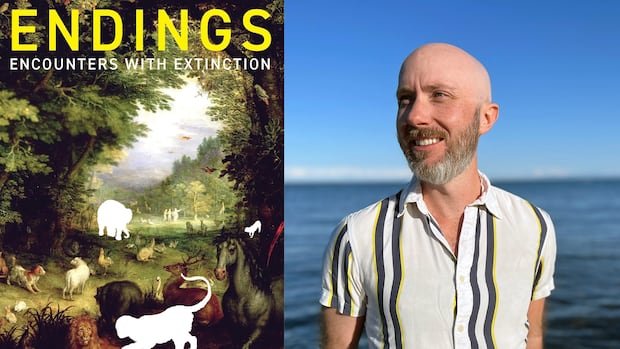

Neil Griffin, who grew up near Drumheller, Alberta, known as the dinosaur capital of the world, always found it intriguing that species that once roamed the Earth are now extinct due to past extinction events. This curiosity led him to pursue a career as a wildlife biologist after studying wildlife internationally. He later obtained a Master of Fine Arts at the University of Victoria and now teaches in the university’s writing department.
Recently, Griffin published a book titled “Endings: Encounters with Extinction,” a 288-page examination of the implications of extinction on humanity. He is scheduled to appear at the Victoria and Vancouver writer’s festivals this month.
According to scientists, approximately 99% of species that have inhabited Earth are now extinct, primarily due to five mass extinctions that occurred over millions of years. Griffin emphasized the rapid rate of the current mass extinction, which has been accelerated by human activities and natural climate changes.
The World Wildlife Fund reports that around 10,000 species face extinction annually, with the extinction rate rising due to human intervention. Griffin highlighted the alarming pace of the current mass extinction compared to previous events that unfolded over millions of years.
Factors contributing to this rapid extinction include human-induced climate change and natural climate variations. Recent climate reports predict a potential 5-degree Celsius increase in temperatures in Canada, along with longer and more intense summer droughts, frequent flash flooding events, and atmospheric river occurrences as consequences of human activities.
Griffin expressed concern over the rapid degradation of the environment caused by human actions over the past two centuries. This accelerated exploitation and extraction of natural resources have alarmed ecologists and conservation biologists alike.
Despite the grim outlook, Griffin found solace in simpler aspects of life while writing the book. He emphasized the importance of appreciating everyday moments and fostering connections with nature. The book’s focus on living in the present and nurturing relationships with the environment resonated with Griffin, inspiring him to explore and share his knowledge of local flora and fauna with his daughter.
Overall, Griffin’s work sheds light on the urgency of addressing environmental challenges and emphasizes the need for sustainable practices to preserve biodiversity and combat the ongoing mass extinction crisis.