

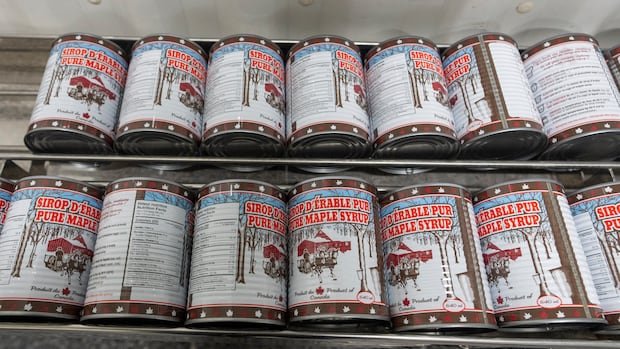

Quebec’s maple syrup producers’ association chief indicates that the province’s reserve of strategic syrup has been exhausted due to increased demand. President Luc Goulet emphasizes the necessity of government assistance to support industry growth. The association keeps a reserve to stabilize prices and supply, which are dependent on weather conditions affecting maple syrup yields.
In recent times, U.S. commercial buyers bulked up on syrup amid concerns over potential tariffs by former President Donald Trump. Goulet notes that the buffer has now reached zero as sales continue to climb. This situation raises the risk of losing customers if weather conditions hinder maple sap flow, as experienced in 2007 and 2008 when stock shortages led to market losses.
Quebec’s maple syrup is making strides in foreign markets, with an increase in exports of 9.34% in 2024 and a further 15.8% surge in 2025 amid tariff threats. However, the export growth slowed to 2.48% in 2026 compared to the previous year’s January-August period. Goulet appreciates the high demand from consumers but believes there is untapped potential in Quebec’s maple groves for further industry expansion.
Goulet calls for increased investments from Quebec City to support producers and processors in exploring new international markets. Currently, nearly 65% of maple syrup exports go to the United States, but efforts to diversify markets have shown progress. Turenne stresses the need to expand into European, Australian, and Asian markets to reduce reliance on the U.S. market.
The maple syrup industry, predominantly based in Quebec, significantly contributes to the province’s economy. The sector, including production, processing, and equipment manufacturing, added $1.21 billion to the GDP in 2025 and employed over 10,000 full-time equivalent workers. The industry also generated $285 million in tax revenue, excluding municipal taxes. The significance of maple syrup production, highlighted during the recent election campaign, surprised many candidates. Goulet underscores the industry’s vital role as a major employer and economic driver, particularly in certain municipalities where maple syrup production is integral to the community’s vitality.