

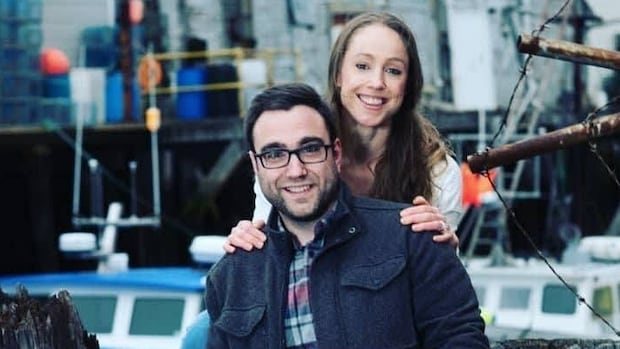

Last year, Michel Pottier and his spouse made the decision to relocate from Maine to his hometown of Halifax, putting considerable effort into planning and adhering to regulations.
Pottier arranged to have his job transferred to Canada, while his wife, Lindsey Jade Higgins, who was born in the United States, sought spousal permanent resident status.
Initially, they anticipated a waiting period of just a few months. However, one year later, Pottier has started working in Halifax, while his wife remains in Portland, Maine, still in anticipation.
Recently, Pottier discovered that they might face an additional year of separation in Canada due to the federal government’s implementation of changes to citizenship law through Bill C-3, which Parliament passed late last year.
“We can’t be together,” Pottier expressed, feeling exasperated. “It’s a tough reality to accept — especially since she’s so nearby.… But regarding paperwork, you might as well be on another planet.”
According to CBC News, Immigration, Refugees and Citizenship Canada (IRCC) has silently paused permanent resident applications for an unspecified number of individuals who may now qualify for citizenship under Bill C-3. This legislation allows those who can demonstrate Canadian ancestry to be eligible for citizenship.
This situation has left those affected in a state of uncertainty — lacking permanent resident status and caught in a nearly three-year backlog of citizenship certificate applications.
Pottier and his wife submitted her spousal family class sponsorship application in September 2025. However, while tracing her family history for the application, they discovered that she has a Canadian great-grandmother, which qualifies her for Canadian citizenship by descent.
They also submitted an application for citizenship in October 2025, when an interim program permitted people to apply before the “lost Canadians” legislation officially took effect.
Unbeknownst to them, this second application led to the predicament they currently face.
Initially, IRCC processed her permanent residency application as expected, including requiring her to pay for medical tests in January. However, Pottier recently learned from his MP, Justice Minister Sean Fraser’s office, that his wife’s permanent resident application was placed on hold in September 2026 because of her potential eligibility for citizenship.
“Had we not submitted the proof of citizenship application, she would have already received her PR,” Pottier remarked. “We believed we were making the right choice, yet it has ruined any chance of beginning our life in Canada together in a reasonable timeframe.”
Pottier stated that he and his wife are now reconsidering their aspiration of living in Canada.
Briannah Dale, a senior communications adviser for IRCC, clarified that under departmental policies, it is not possible to be both a permanent resident and a Canadian citizen simultaneously.
“If an individual applies for proof of citizenship while also seeking permanent residency, their permanent residency application will be paused until the concurrent citizenship application is evaluated,” she explained in an email response.
“If citizenship is confirmed, the permanent residency application will be considered withdrawn. Conversely, if citizenship is not confirmed, the permanent residency application will revert to its original position in the processing queue and continue processing.”
Dale added that an IRCC officer may also suspend a permanent residency application even without a citizenship certificate application if the officer has “compelling reasons to believe an applicant may already be a citizen under Canadian law.”
Due to “systems limitations,” Dale stated that the department is unable to disclose how many permanent residency applications have been put on hold due to potential citizenship eligibility.
However, she assured that individuals who already possess permanent resident status will not lose it while awaiting their citizenship certificate.
Currently, the wait time for those applying for family sponsorship of spouses from outside Canada (and outside Quebec), like Pottier’s wife, is 18 months. In contrast, the wait time for citizenship certificate applications has now reached 34 months, partially due to a surge in applications following the enactment of Bill C-3, especially from American applicants.
From December 15, 2025, when Bill C-3 was enacted until August 31, IRCC has approved 7,900 applications for Canadian citizenship certificates under the new law. Additionally, 22,570 individuals born abroad to a Canadian parent have also received citizenship certificates.
A Canadian citizenship certificate enables the holder to obtain a Canadian passport and reside and work in Canada. However, certain benefits, such as universal health care, require residency.
-
Demand for Canadian citizenship certificates soaring, fuelled by Americans
-
Canadian citizenship certificate applications now facing nearly 3-year delays
The interest in Canadian citizenship by descent has surged to the extent that archives in both Canada and the United States have been inundated with requests for birth certificates and other documentation needed to verify Canadian ancestry, with some applicants tracing back several generations.
In early October, the Association of Canadian Archivists reached out to Immigration Minister Lena Metlege Diab, urging the federal government to provide funding and support to help archives manage the increased workload stemming from Bill C-3.
As of yet, the association has not received a response.
Montreal immigration attorney Lisa Middlemiss noted that Pottier’s family is not alone in navigating the complexities of IRCC’s management of permanent residency and Bill C-3.
“This situation arises more frequently than one might expect,” she commented.
“We often consult with individuals who may have a potential claim to Canadian citizenship and have recently learned about Bill C-3, but who also qualify or would typically qualify for permanent residency.”
Middlemiss indicated that IRCC has yet to provide any guidance to immigration lawyers regarding “how to navigate this ambiguous situation.”
“The challenge is that people find themselves in a sort of processing limbo, waiting for their permanent residence application to be processed, which may not occur if they are a Canadian citizen, and they are uncertain if their Canadian citizenship application will be addressed promptly.”
Immigration, Refugees and Citizenship Canada is struggling to handle a flood of citizenship applications. According to the department’s most recent update, those applying for a citizenship certificate could now face a wait of 33 months.
NDP immigration critic Jenny Kwan stated that the effects of Bill C-3 on permanent resident status were not anticipated by Parliament during the discussion of the legislation.
Kwan mentioned that she has been attempting without success to obtain answers from Diab’s office concerning a constituent who is caught in this predicament.
“I just cannot comprehend why it is so challenging for the minister to perform her duties and provide clarity and confirmation for the public and for us as representatives of our constituents,” she remarked.
“I believe the minister is failing to fulfill her responsibilities in executing Bill C-3.”
Diab’s office has not yet replied to inquiries from CBC News.