



During a meeting in Shenzhen, China, on Tuesday, Prime Minister Mark Carney and Chinese President Xi Jinping reached an agreement to strengthen economic and trade relations, enhancing a tariff arrangement that will provide relief on Canadian exports valued at approximately $400 million, including various pork and seafood items.
-
Canada and China reveal new trade initiatives and cultural collaborations on Carney’s first day in Shenzhen
-
Audio
Carney proposes deeper automotive connections with China. What are the potential risks?
In exchange, Canada has agreed to reduce certain tariffs on steel and aluminum.
Below is a summary of the implications of these changes across different sectors.
Seafood
Earlier this year, in January, Carney and Xi established a deal that resulted in China eliminating tariffs that were set to begin in March 2025 on various agricultural and seafood products, including a 25 percent tariff on lobster and crab.
On November 4, the federal government announced that China will prolong the expiring tariff-free status for an additional two years.
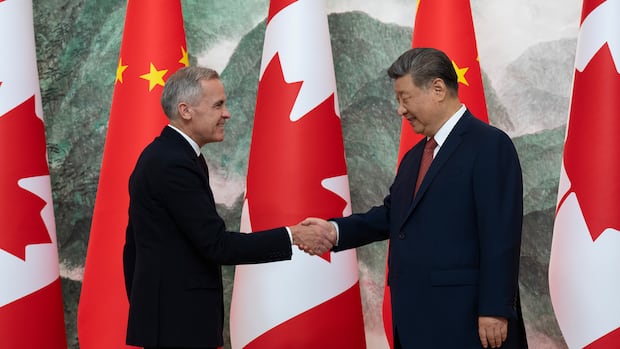
Prime Minister Mark Carney and Chinese President Xi Jinping have reached a trade agreement that will see China eliminate tariffs on approximately $400 million worth of Canadian exports, including frozen pork and shrimp, until 2028. In return, Canada will continue tariff exemptions for specific Chinese steel and aluminum products.
The announcement made on Tuesday extended the tariff elimination to encompass “certain frozen cold-water shrimp and prawns, including Pacific spot prawn ($87.5 million); specific molluscs, like geoduck ($61.4 million); sea cucumber ($39.4 million); and Greenland halibut ($96 million).”
In 2024, approximately 16 percent of Canada’s fish and seafood exports were directed to China.
Canola meal, peas, and other crops
The relief and extension for canola meal and peas followed the same timeline as that for lobster and crab, which effectively halted tariffs of 100 percent.
Additionally, Tuesday’s agreement opened market access for Canadian fava beans, chickpeas, and lentils to China.
Bill Prybylski, president of the Agricultural Producers Association of Saskatchewan, remarked earlier this month that the federal government’s announcement is excellent news for canola farmers.
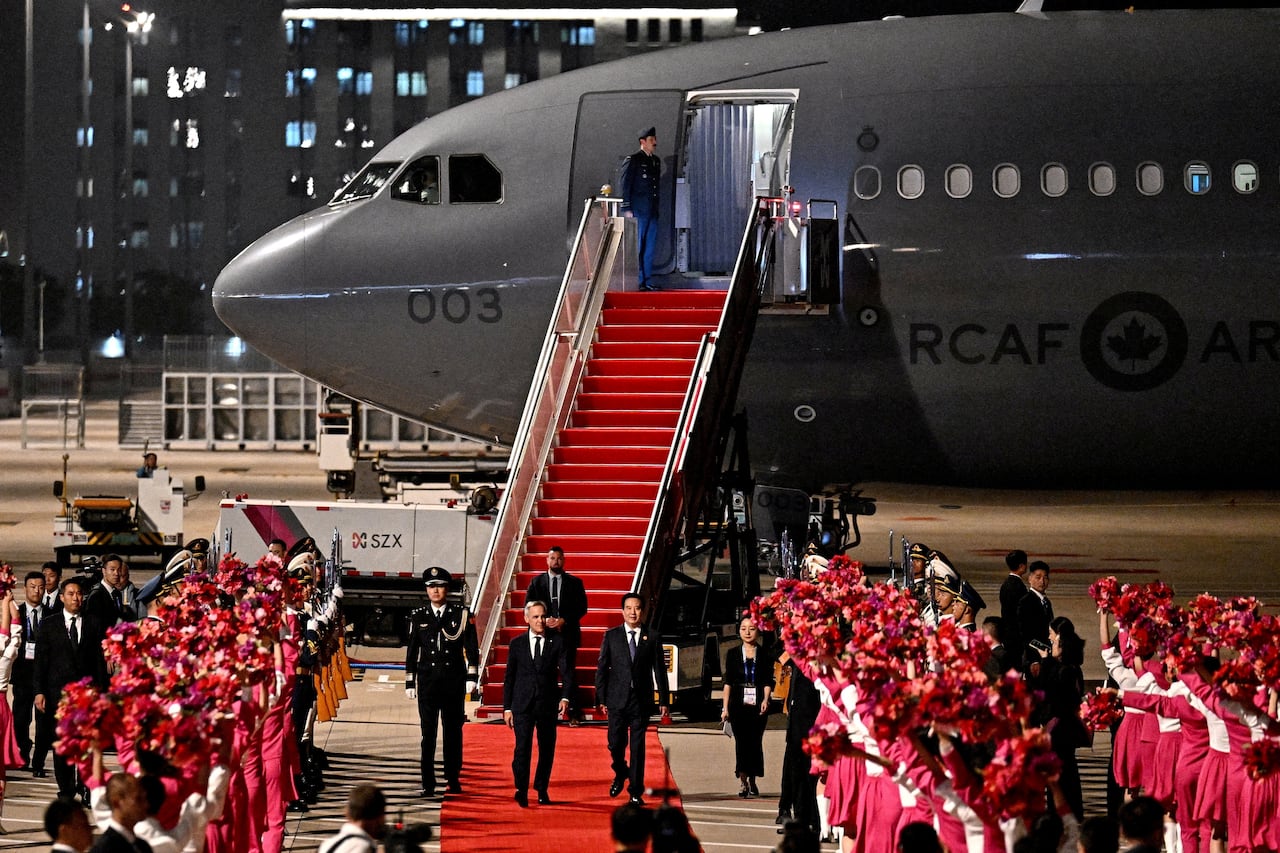
Carney arrives at Shenzhen Bao’an International Airport for the Asia-Pacific Economic Cooperation (APEC) summit on Monday. (Pedro Pardo/Reuters)
“[It] provides our producers with assurance to proceed with planning, knowing that there will be a market for the canola meal.”
Chinese tariffs on canola seeds were reduced from 84 percent to 14.9 percent in March, and this lower rate was maintained in the November 4 extension.
It is important to note that canola oil is not included in either agreement and continues to be subjected to a 100 percent tariff.
Prybylski has pointed out that while the situation with canola oil tariffs is concerning, it is less critical than having the opportunity to sell canola meal and seeds in China.
“We would like to see the tariff completely removed, but for the time being, it is manageable,” he stated.
Pork
Pork was excluded from the January agreement; however, now “most frozen pork cuts,” amounting to $116 million, will have tariffs lifted until at least December 31, 2028, which is the new termination date for all tariff agreements.
The pork industry welcomed the new agreement as a significant advancement in regaining some of the market access that had been lost over years of diplomatic tensions.
In 2024, prior to the imposition of tariffs, Canada exported $468.6 million worth of pork products to China.
The Canadian Meat Advocacy Office based in Beijing applauded the expanded access for pork, although it noted that offal remains prohibited. Offal refers to the internal, non-muscle parts of an animal, including organs and entrails.
Kyle Larkin, CEO of the Canadian Meat Council, emphasized that the Chinese market is highly valuable, largely because of the variety of meat cuts consumed in the region.
“There is a vast consumer base in China that enjoys products like feet, heads, and various offal, including kidneys and hearts, which are not as favored by Canadian consumers,” he explained.
Steel and aluminum
In exchange for the aforementioned tariff relief, Canada has consented to prolong tariff relief known as remission on specific Chinese steel and aluminum products until December 31, 2028, which were originally set to expire at the year’s end.
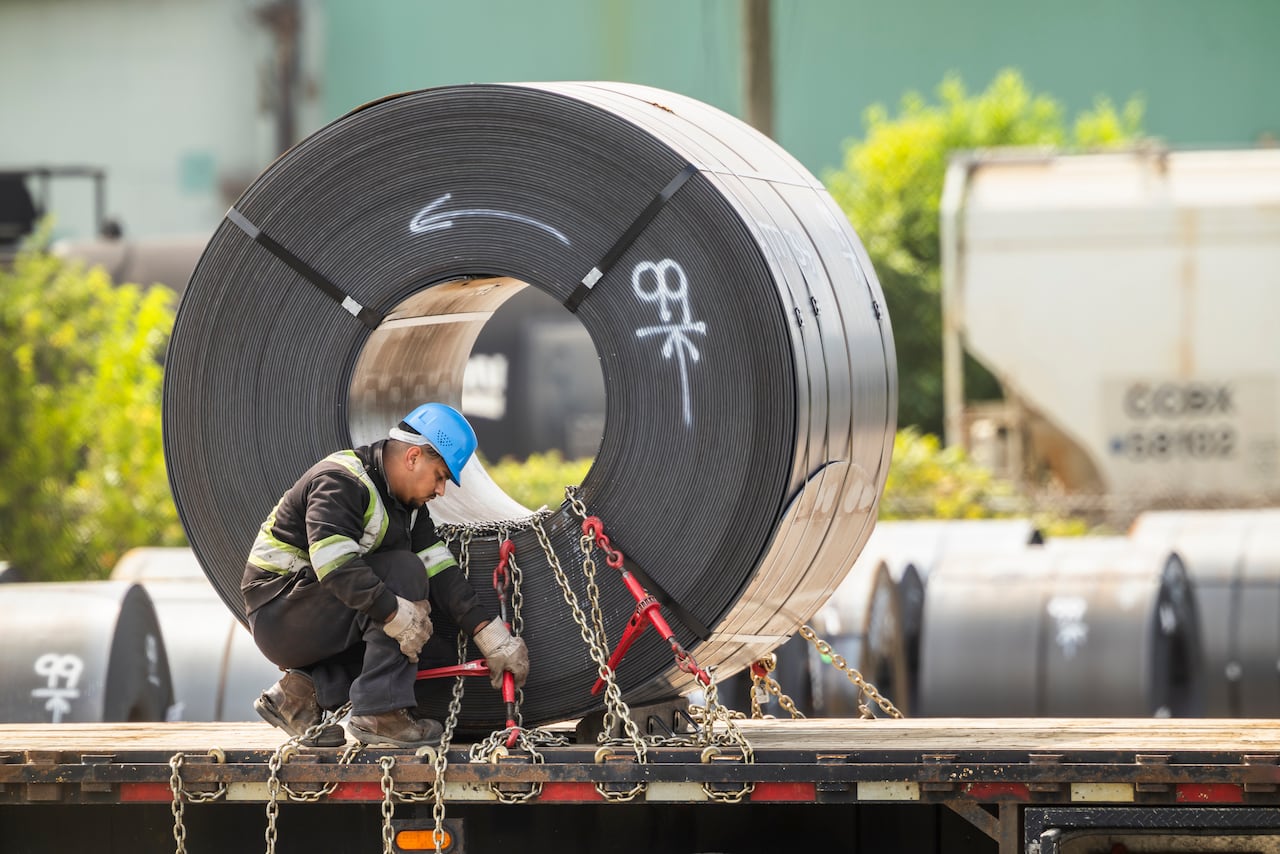
A worker fastens a rolled steel coil to a flatbed truck at the ArcelorMittal Dofasco steel plant in Hamilton, Ont., on August 20. (Nick Iwanyshyn/The Canadian Press)
The agreement announced on Tuesday adds 32 new items to the remission list — comprising 23 steel tariff items and nine aluminum tariff items, for products the Canadian government deems “insufficient or unavailable.”
CBC News has contacted the Canadian Steel Producers Association and the Aluminum Association of Canada for comment.
Electric vehicles
Under the January agreement, Carney also permitted the entry of tens of thousands of Chinese electric vehicles into Canada with reduced tariffs.
Canada cut its 100 percent tariff on Chinese electric vehicles down to 6.1 percent, initially allowing up to 49,000 vehicles per year, with the limit increasing to 70,000 cars over a five-year span. Since then, Chinese automakers like BYD, Geely, and Chery have begun making moves to penetrate the Canadian market.

The trade relationship between Canada and China, while crucial, needs to be managed with caution, according to Michael Kovrig, a former diplomat who was imprisoned in China on espionage charges for over 1,000 days. He asserts that the benefits of Prime Minister Mark Carney’s latest trade deal are uneven and predominantly favor China.
There were no significant updates regarding electric vehicles on Tuesday; however, a background document released on November 16 indicates that the deal has led to the importation of 16,211 EVs into Canada since March, with approximately half priced below $35,000 CAD.
Starting next year, the percentage of the quota allocated for affordable EVs priced at $35,000 CAD or less will be fixed at 10 percent, increasing to 50 percent by 2030.
“Canada anticipates that this arrangement will stimulate significant new Chinese joint venture investments in Canada with trusted partners, thereby safeguarding and creating new auto manufacturing positions for Canadian workers and ensuring a resilient development of Canada’s EV supply chain,” the document states.