

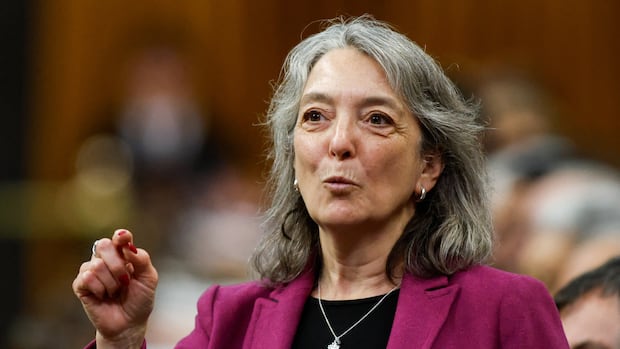


At the COP31 conference taking place in Turkey, Environment Minister Julie Dabrusin asserts that Canada is recognized as a frontrunner in combating climate change.
This recognition comes despite the fact that the Liberal government’s recent funding for the oil-and-gas sector has drawn criticism from climate experts, environmental groups, and previous environment ministers.
During his address at the COP31 UN climate summit on Friday, United Nations Secretary General António Guterres urged for a “swift transition away from fossil fuels.”
However, under Prime Minister Mark Carney’s administration, Canada has proposed legislation designed to circumvent environmental protections to expedite significant projects, pursued international funding for a West Coast oil pipeline that may endanger vulnerable whale populations, introduced a tax incentive for oil extraction, quietly ceased efforts to terminate thermal coal exports, and most recently, opened the possibility for future oil drilling in the Arctic.
Dabrusin, nevertheless, claims Canada is receiving a positive response at COP31, where it has pledged financial support alongside the U.K. to aid in climate change mitigation for at-risk nations. Additionally, she notes that Canada’s strategy for reducing methane emissions and expansion of electrification are being recognized as significant advancements at the conference.
The minister engaged in a conversation with As It Happens host Nil Kӧksal on Friday from Antalya, Turkey. Below is an excerpt from their discussion.
Minister Dabrusin, you heard António Guterres’ remarks … how is your government’s renewed support for the oil-and-gas sector being received at this COP?
Canada is being welcomed warmly here. We are recognized as leaders in the climate change battle, and I have felt that support and positivity in every room I’ve entered.
We are among only two developed nations that have reaffirmed our commitment to international climate financing, which is acknowledged as a leadership role for Canada at COP.
We possess one of the most rigorous regulatory frameworks for lowering methane emissions. Recently, we updated our regulations to achieve a 72 percent reduction in methane emissions from oil and gas by 2030.
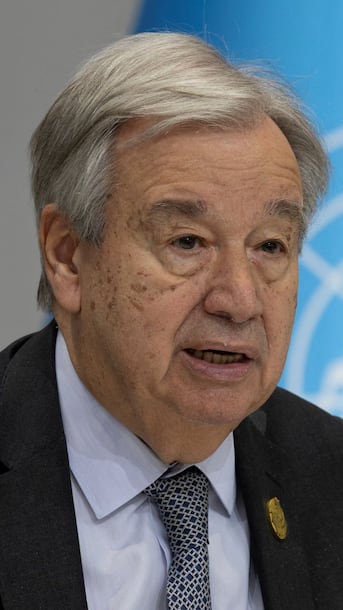
United Nations Secretary General António Guterres criticized ‘big emitters’ and the fossil fuel lobby during the 31st Climate Change Conference (COP31), urging for significant emissions reductions to maintain global warming below the 1.5 C threshold established by the Paris Agreement by century’s end.
So, Minister, has anyone approached you expressing concerns about Canada’s leadership, given all the recent announcements and decisions?
We are discussing recent actions. The recommitment to international climate financing is a recent choice made earlier this year. The update to our methane regulations was finalized at the end of last year. Furthermore, our ongoing initiatives regarding oceans are relevant as we prepare for our oceans conference.
Our efforts in clean electricity and electrification, which are focal points at COP, are acknowledged. The budget we presented last week emphasizes doubling our electricity grid and allocating funds for electrification.
These are the topics being discussed here, with other countries looking at how we are implementing them. Canada is actively investing in these initiatives domestically while also providing support to other nations through international climate financing.
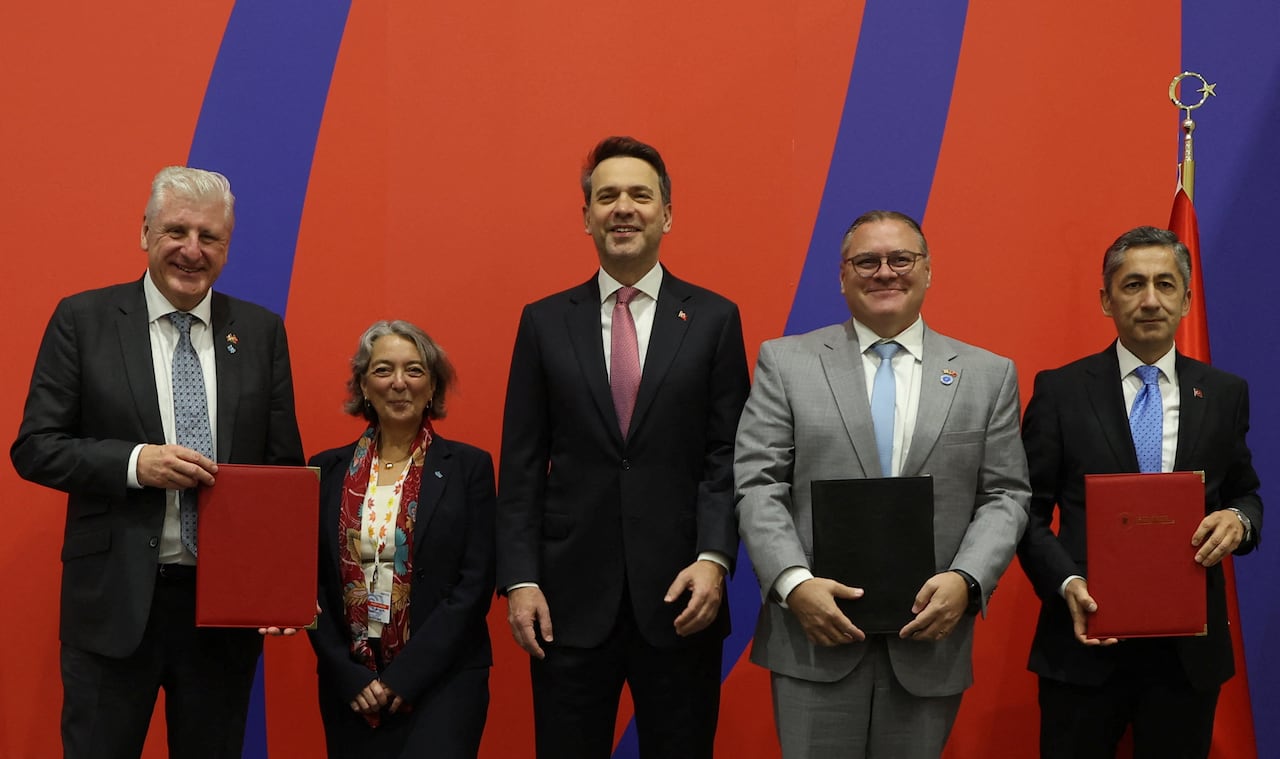
At COP31, a partnership was formed between Canadian firm AtkinsRealis and Turkish state nuclear energy company TUNAS to investigate the expansion of Turkey’s nuclear capabilities. From left to right: AtkinsRealis CEO Ian L. Edwards, Dabrusin, Turkish Energy Minister Alparslan Bayraktar, AtkinsRealis nuclear president Joe St. Julian, and TUNAS General Manager Necati Yamac. (Kaan Soyturk/Reuters)
Domestically, concerns certainly exist. Earlier this week, the prime minister was queried regarding the allocation of $11 million in the most recent budget to “support the governance and oversight of offshore oil-and-gas activities in the Arctic Ocean.” He responded to journalists: “This is not a decision about lifting that moratorium, but about respectful engagement” with Indigenous leadership. Could this engagement eventually result in oil or gas drilling in the Arctic? Yes or no?
There is no decision within this budget regarding the lifting of the moratorium on oil and gas. He was explicit about that, and I will reiterate it. This funding is not intended for that purpose.
Can you assure us that there will be no drilling for oil or gas in the Arctic following this engagement period?
What I can confirm is that this budget includes funding to ensure we can engage with northern communities and Indigenous groups about resources, but this does not constitute a decision in the budget.

COP31 has commenced in Turkey, where the Canadian delegation will defend its climate policies while the government advocates for increased oil and gas production. This marks the first UN climate change conference without the participation of the United States.
Former Liberal Environment Minister Catherine McKenna posted this week — she is also attending the summit — stating: “Detailed analysis by Climate Action Tracker shows Canada’s policies and actions are ‘critically insufficient’ and aligned with a 4+ degree warmer world.” What is your response to those, including many young Canadians, who feel your government is letting them down?
I believe this is crucial for young Canadians and all Canadians to understand that we are determined to combat climate change. We are deeply committed to achieving this goal in a manner that meets the needs of Canadians.
Reviewing our latest budget, Budget 2026, it’s evident that we have laid the groundwork to ensure a transition to electricity.
We have made the largest investment in clean energy in North American history through Churchill Falls.
We are expanding the EV charging network across Canada.
We’re also assisting Canadians in transitioning to heat pumps and retrofitting their homes. We announced plans for one million homes.
Moreover, we are advancing energy efficiency initiatives.
Even with all these efforts … if there remains a strong reliance on oil and gas, or even opportunities for growth in those sectors, can you understand why young Canadians, in particular, are struggling to trust that the outcomes beyond this budget won’t be detrimental to their environment?
The evidence is in our financial commitments in this budget, which focus on electrification—precisely what we need as a nation to move towards electrification. That is the emphasis here at this COP.
I assure you, our government is fully dedicated to ensuring Canada reduces its emissions and transitions to electrification.
Additionally, we remain committed as one of only two developed nations to fulfill our international climate finance obligations, allowing other countries to seize these opportunities as well.